
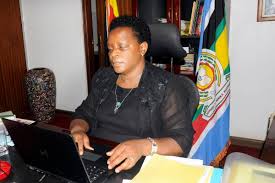
By Jumah Kakomo
The State Minister for Gender and Culture, Peace Regis Mutuuzo, is urging Ugandans to abandon cultural and religious practices that perpetuate gender-based violence.
This comes ahead of the 16 days of activism against Gender Based violence, which is an international campaign that aims to raise awareness and mobilize action to prevent and eliminate violence against women and girls. The campaign runs from November 25, the international Day for the elimination of violence against women, to December 10, Human Rights Day.

The 16 Days of Activism campaign provides a platform for individuals, organisations, and governments to come together and take action to prevent and eliminate GBV
The State Minister for Gender and Culture Hon. Peace Regis Mutuuzo says Ugandans must confront and reject customs and traditions that harm the women and girls, emphasizing that these practices are not only unacceptable but also illegal. Mutuuzo cited examples of harmful practices, including child marriage, Female Genital Mutilation (FGM) highlighting that globaly, over 230 million girls and women have undergone to Female Genital Mutilation representing 15% increase that involves the partial or total removal of external Female genitalia, leading to physical and emotional harm.
According to the Uganda Bureau of Statistics 2021, the national survey on violence in Uganda reported that 95% of Ugandan Women and girls had experienced physical and /or sexual violence, and the Ministery of gender in the same year said that Gender Based Violence (GBV) led to at least 168 deaths.
Cultural and religious practices can be considered gender based violence (GBV) when they sanction or perpetuate harmful beliefs about women and girls or when they lead to violence against them.
Cultural and religious practices can contribute to gender-based violence (GBV) in several ways:

*Social and Cultural Norms*
1. *Patriarchal societies*: Cultural practices that emphasize male dominance and female subordination can perpetuate GBV.
2. *Stereotyping and stigma*: Harmful stereotypes and stigmatization of women and girls can lead to discrimination, marginalization, and violence.
3. *Early and forced marriage*: Cultural practices that promote early and forced marriage can increase the risk of GBV, including domestic violence and sexual exploitation.
*Religious Practices*
1. *Misinterpretation of religious texts*: Selective interpretation of religious texts can be used to justify GBV, such as wife beating or female genital mutilation (FGM).
2. *Restrictive gender roles*: Religious practices that reinforce restrictive gender roles can limit women’s autonomy and increase their vulnerability to GBV.
3. *Blaming the victim*: Some religious practices may blame the victim for GBV rather than holding perpetrators accountable.
*Harmful Traditional Practices*
1. *Female genital mutilation (FGM)*: FGM is a traditional practice that involves the partial or total removal of external female genitalia, leading to physical and emotional harm.
2. *Widow inheritance*: This practice involves a widow being forced to marry a male relative of her deceased husband, often leading to emotional and psychological trauma.
3. *Bride price*: The practice of paying a bride price can be used to justify domestic violence and marital rape, as women are seen as “property” rather than equals.
Mutuuzo says that by understanding the complex relationships between cultural, religious, and traditional practices, they can work towards preventing GBV and promoting a culture of equality and respect.
