
By Kabuye Ronald
A major new scientific study has uncovered alarmingly high levels of mental health challenges and substance use among young women living in Kampala’s urban slums, exposing what researchers describe as a largely invisible public health crisis.

The research, led by the TOPOWA Project and published in BMC Public Health, surveyed 300 young women aged 18 to 24 in the informal settlements of Banda, Bwaise, and Makindye. It represents one of the most comprehensive mental health assessments ever conducted among young women in these communities.
The findings are stark. Nearly three-quarters of participants (74%) reported experiencing at least one mental health concern. Depression was the most common condition, affecting 58% of respondents, followed by suicidality (46%) and anxiety (35%). More than 45% reported living with two or more mental health conditions at the same time, a pattern known as comorbidity that significantly increases vulnerability.
Substance use emerged as a critical and compounding factor. Alcohol use was reported by 28% of participants, while 11% reported drug use. Both were strongly associated with poorer mental health outcomes, particularly among women facing multiple mental health challenges.
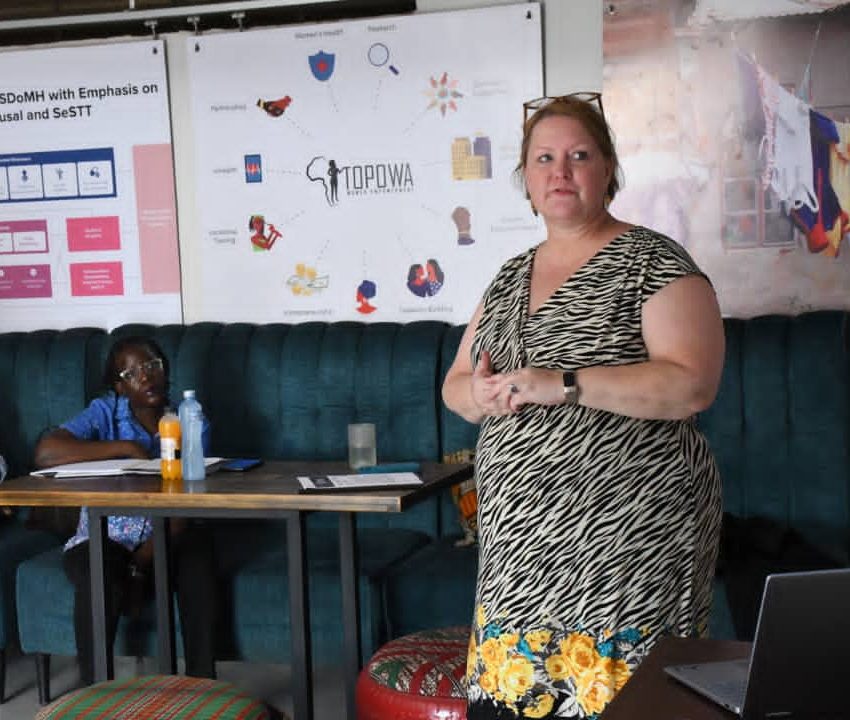
“These findings reveal a serious and often invisible public health crisis,” said Dr. Monica Swahn, Principal Investigator of the TOPOWA study. “Young women in Kampala’s informal settlements face overlapping challenges, poverty, violence, mental illness, and substance use that cannot be addressed in isolation. Integrated mental health support is urgently needed.”

According to the researchers, the rates of depression and suicidality documented in the study are far higher than national estimates for Uganda and exceed levels reported in many neighboring countries. Living conditions in informal settlements marked by food insecurity, overcrowding, unemployment, and exposure to violence were identified as key drivers of distress.
Women experiencing multiple mental health conditions were also significantly more likely to report alcohol or drug use. Those facing both mental illness and drug use were three times more likely to describe their mental health as poor, underscoring the depth of unmet need.
Despite Uganda’s recent progress in mental health policy, the study highlights persistent gaps in access to affordable, youth-friendly, and gender-responsive services particularly for young women in slum communities.
“This study provides Uganda with critical data to support more targeted mental health programming,” Dr. Swahn said. “It underscores the need for community-based, scalable interventions that reach the most vulnerable young women.”
TOPOWA meaning “don’t give up” in Luganda is a multi-year cohort study conducted in partnership with Uganda Youth Development Link (UYDEL), Makerere University College of Health Sciences, and Virginia Commonwealth University. The project is funded by the U.S. National Institute of Mental Health and examines mental health, substance use, violence, and the impact of community-based vocational training and empowerment programs.
Researchers will continue following the cohort to assess how vocational training and psychosocial support influence mental health over time. The findings are expected to inform policymakers, local governments, NGOs, and health practitioners working to improve the well-being of young women in Uganda’s urban slums.
