
By Elijah Khisa
Senior Presidential Advisor on Political Mobilisation Moses Byaruhanga has reaffirmed the government’s commitment to strengthening the technical capacity of medical interns, encouraging them to utilise part of the Shs125 billion Medical Association SACCO fund to establish their own private health facilities.
The initiative is intended to enable committed medical interns to access financing and invest in private healthcare facilities, boosting their incomes and creating employment opportunities rather than relying solely on government internship allowances.
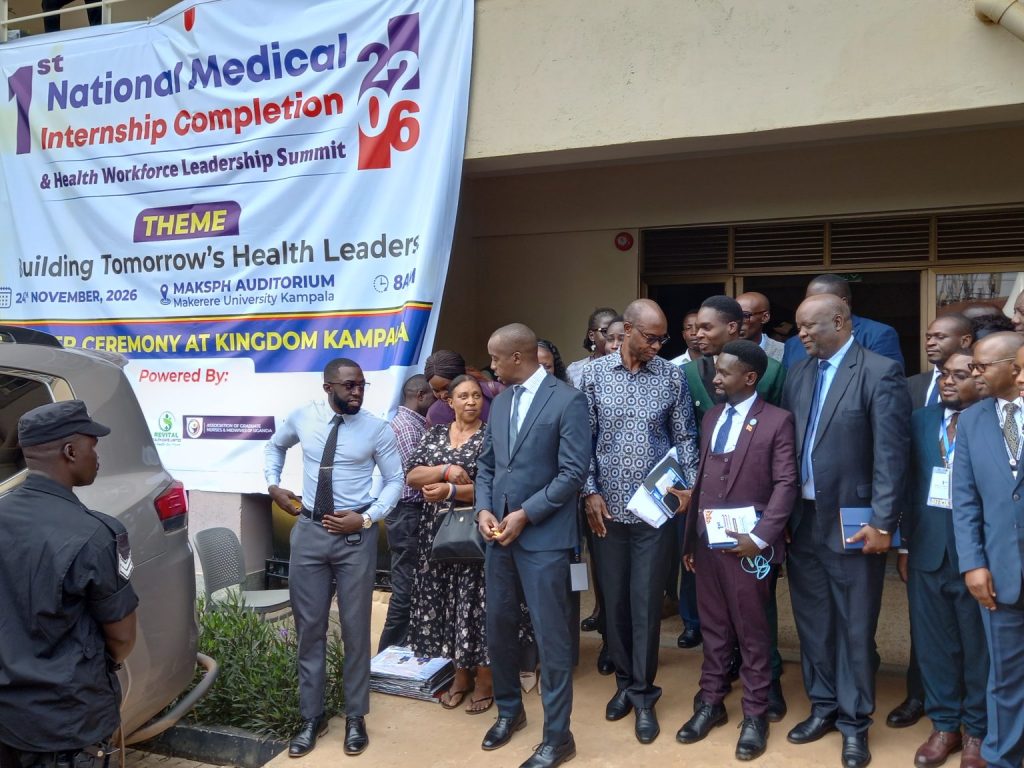
Byaruhanga made the remarks on November 24, 2026, during the opening ceremony of the first National Medical Internship Completion and Health Workforce Leadership Summit, organised by the Federation of Uganda Medical Interns (FUMI) at Makerere University.
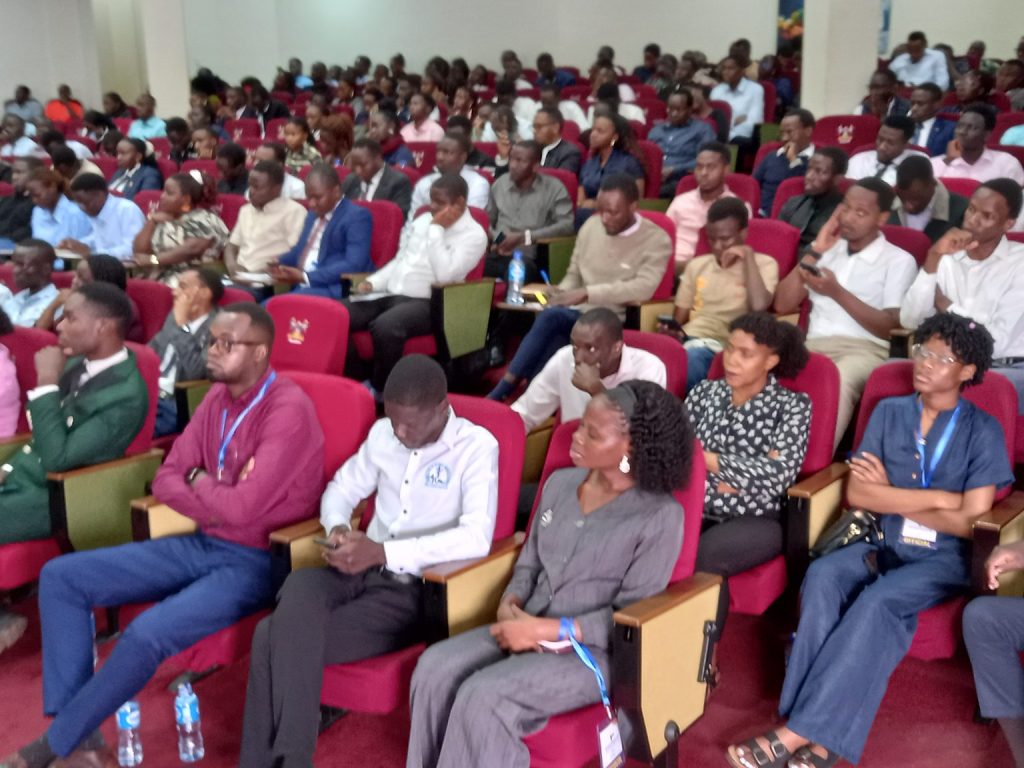
The summit, held under the theme “Building Tomorrow’s Health Leaders,” brought together more than 600 medical interns, senior government officials, civil society organisations (CSOs) and media representatives to discuss challenges affecting medical interns, mentorship of future health leaders, leadership, healthcare practice, policy and professional networking.
In a presentation titled “Institutional Support, Workforce Governance and Professional Development,” Byaruhanga urged the interns to organise themselves into groups, establish companies comprising at least four medical professionals and develop business plans for setting up private specialist healthcare facilities.

He encouraged them to apply for financial support from the Shs125 billion Medical Association SACCO fund to facilitate the establishment of the facilities.
Byaruhanga said such privately owned health facilities, established by young medical professionals, would complement government efforts to improve healthcare delivery while providing the interns with sustainable sources of income.
He assured the interns that government was ready to support their investment plans by facilitating access to financing through the SACCO. He added that government could consider increasing the SACCO’s funding if the existing allocation proved insufficient to support the proposed projects and group savings investments.
Byaruhanga also expressed concern over the billions of shillings returned to the Consolidated Fund annually as unspent resources, particularly money allocated for government recruitment.
He said the situation was unacceptable, arguing that planning and administrative challenges within government institutions were partly responsible for the failure to utilise the allocated funds.
He pledged to engage strategic ministries, including Finance, Public Service and Local Government, to ensure that recruitment schedules were adjusted to allow sufficient time for the entire process, from job advertisements and interviews to deployment.
“It is really ugly that cadre recruitment resources are returned to the Consolidated Fund as unspent resources because the problem must be at the planning level by the technocrats, whom we are going to engage to ensure that recruitment processes are adjusted effectively to allow smooth preparations covering interviews and later deployment by the Public Service Commission,” he said.
Byaruhanga questioned why substantial amounts of money should be returned to government coffers when hundreds of qualified and committed medical interns were available and willing to serve in health facilities, particularly in rural areas.

He criticised delays in recruitment processes, saying technocrats should not continue using delayed job advertisements and failure to meet recruitment deadlines as excuses for returning unspent resources.
“The technocrats just look on with claims that the job advertisement process delayed to hit the maturity deadline. Such inaction must cease to occur,” he said.
His concerns received support from participants and members of the panel, who emphasised the need for improved workforce planning and better utilisation of resources allocated to the health sector.
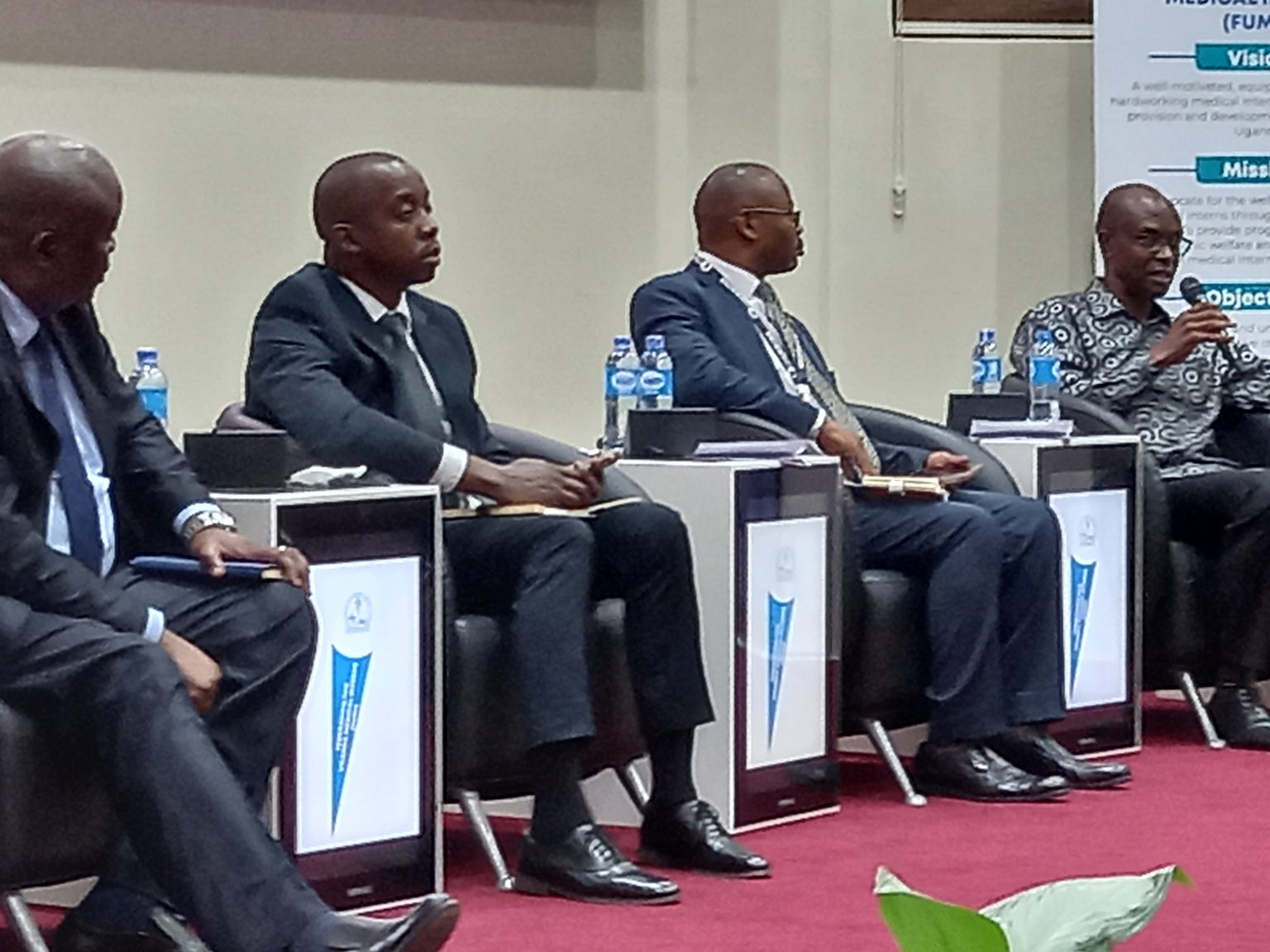
Among those who attended were the Minister of State for Health in charge of Primary Health Care, Dr Charles Ayume; Commissioner for Emergency Medical Services at the Ministry of Health, Dr John Baptist Nambohe; Acting Commissioner for Clinical Services, Dr Michael Mutegeki; and other senior health sector officials.
Dr Nambohe, who represented the Ministry of Health Permanent Secretary, Dr Diana Atwine, said government was committed to expanding and strengthening the health workforce through targeted recruitment and improvements in infrastructure and the acquisition of essential medical equipment.
However, he said the planned interventions would be implemented in phases, depending on available resources and government priorities.
Dr Ayume, who represented the Minister of Health, Dr Chris Baryomunsi, read a speech by President Yoweri Kaguta Museveni, who had been expected to attend the summit as the chief guest.
In the presidential message, medical interns were encouraged to consider undertaking internship-related work for between three and five years before pursuing specialist medical training.
The message noted that gaining additional practical experience would enable young medical professionals to acquire sufficient knowledge and skills in their respective fields before enrolling for specialist training.
