
By Hannah Marion Namukasa
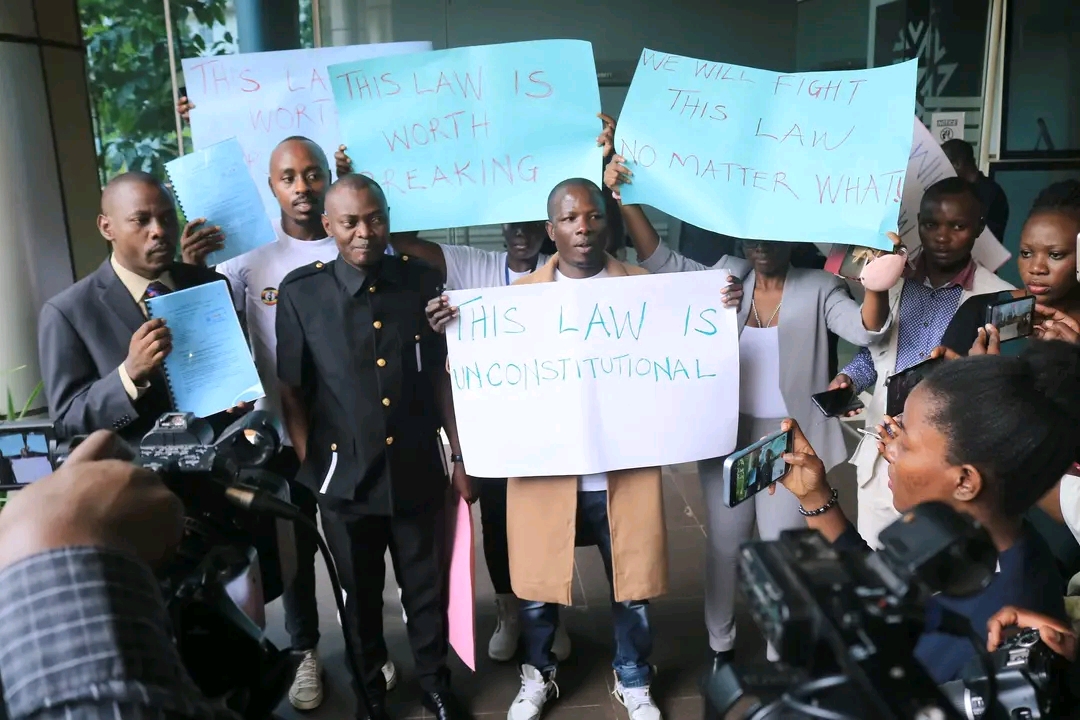
The Alternative DigiTalk Limited, an online visual media house and 12 other Ugandans including journalists lawyers and human rights activists have registered a petition in the Constitutional Court seeking to nullify the new amendments in the Computer Misuse Amendment Act 2022.
The petitioners who include journalists Arnold Anthony Mukose, Norman Tumuhimbise, Farida Bikobere , Jeremiah Mukiibi, Kato Tumusiime, Lillian Luwedde ,Rogers Tulyahabwe, Teangel Teddy Nabukeera, Nixon Segawa human rights activist Angella Namirembe and lawyers Simon Peter Esomu and Anthony Odur want the law nullified on grounds that the amendments are illegal and violate the freedom of expression.
In the petition against the Attorney General through their lawyers of Peter Arinaitwe and Company Advocates, the petitioners argue that the said amendments are overly broad, imprecise, and unjustifiably limit the freedom of expression.

They also urge that the phrase “unsolicited information” as used in the amended Act is disproportionate, indiscriminate and overly broad in application because it doesn’t clearly specify what amounts to unsolicited information.
The infamous bill was tabled by Kampala Central MP, Muhammad Nsereko early this year, later debated and passed despite criticism by members of the public, journalists and opposition political actors.
Nsereko defended the law on grounds that it will regulate social media and other media platforms especially when it comes to propagating fake news.

The law makes it a crime to write, send or share hateful, unsolicited, misleading, or malicious information online. The law also criminalizes the use of photos on social media without the express permission of the owners.
Further, it prohibits sharing information which is likely to degrade or ridicule another person, group of persons, tribe, religion, ethnicity, or gender, and children without the consent of their parents or guardians.
The same Act creates a punishment ranging between five to 10 years or 10 million shillings or both for people found in breach, and it further criminalizes recording another person’s voice or video without their consent and unauthorized access to personal information.
“The impugned law has hindered and complicated our work as digital journalists,” says Mukose. “In particular as an editor, it is an affront to my editorial independence. At the moment I fear to sanction broadcasts on our media platforms because our content may be treated as offensive and ridiculing by a viewer thus attracting prosecution from the state”, reads an affidavit of Arnold Anthony Mukose the Programs Manager at Alternative Digitalk who says that he has 14 years’ experience in journalism
“Further, given the fact most our talk shows and programmes are broadcast live on our social media platforms it is impracticable for me as the editor to ensure that the information streamed and shared during the live broad casts does not ridicule, degrade or demean the viewers since the meaning attached “ridiculing”, “degrading” or “demeaning” varies from one person to another.” It further reads
The petitioners thus want the court to declare sections 2, 3, 4, 5, 6 and 7 of the of the Computer Misuse Act as amended to be in contravention of constitutional rights to fair hearing, freedom of expression right to access information among others.
