
By Namiganda Jael
Adjumani district hosts one of the highest population of refugees coming from (mainly) from South Sudan. With a population of 66% women refugees in Adjumani district, women and girls constitute the highest number of vulnerable people in terms of physical and psychological abuse. Women and girls in refugee settlements have been discovered to be more vulnerable since they suffer from even the responsibility of taking care of men, to raise their families by providing shelter, food, hospital bills, clothing and many more necessities.
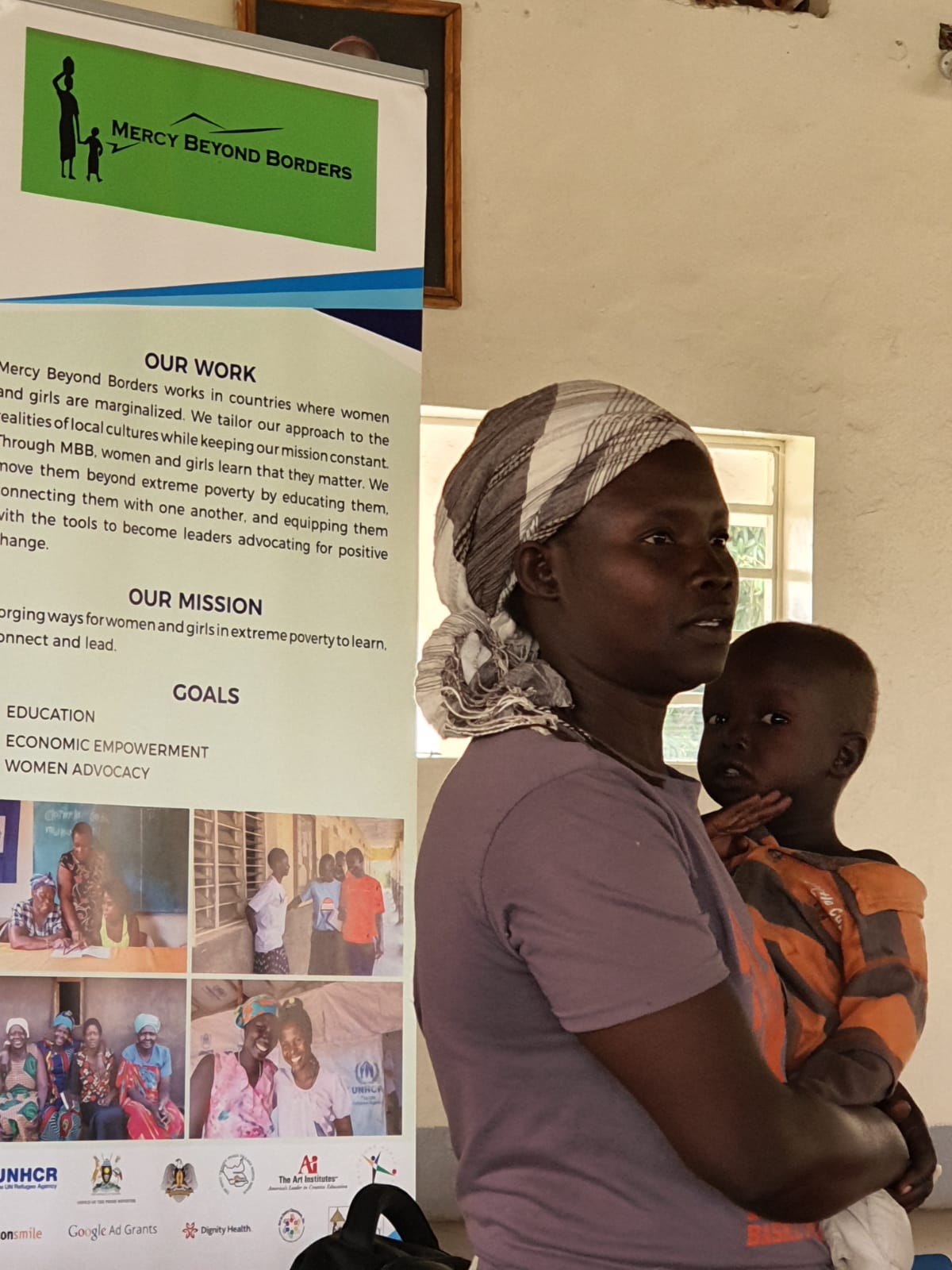
Given this background, Mercy Beyond borders (MBB), a non-profit organization (501(c)3) registered centrally at 1885 de la Cruz Blvd, Unit 101, Menlo Park, CA 95050, (USA) and founded by a Catholic nun in the name of Sr. Marilyn C. Lacey came up to help women in these refugee settlements. Services that MBB offers include: education (offering scholarships to the best performing refugee girls), micro-enterpirse loans commonly called livelihood projects and advocacy through training).
APEU-O Dan Emmanuel, the director of MBB Africa, at an orientation exercise of over 60 women who have fulfilled the requirements to enroll for a loan with small interest so as to boost their businesses called upon these refugee women to be hardworking inorder to benefit from these loans, and since these loans are revolving, they were also asked to ensure they repay promptly so that other following groups get the same opportunity tomorrow.
“I encourage you to be very hardworking because the money given to you is revolving which gives women the opportunity to receive the same loan in future”. He called for team spirit among women groups so that they can be able to help colleagues who meet challenges during their time of operation. He also challenged women to save together and attend meetings regularly to be able to support each other. “You should save on time to avoid extra charges and defaulting”.
Emmanuel also added that, MBB does not only stop at providing loans to women groups but also
offers health training with organizations like Days for Girls, and education scholarships to best
performing refugee girls of whom over 300 have benefited who would have, otherwise, not had such a chance to advance their educational opportunities but remain the settlements.
Mr. Martin Mugumya, a facilitator who was invited by MBB from Village Enterprise, engaged women during the training and taught them how to save and the three major types of saving which included: saving with a purpose, regular savings and welfare savings if they needed to realize these loans with profits. He also called upon these women to encourage the spirit of proper management among their groups in order to yield greater results.
Mr. Jogo Titus, the Refuge Desk Officer and the person representing government on refugees
matters, said, “as government, and because of the vulnerability of women and girls, we want to engage refugee women and girls in agriculture. But this comes at a cost which as government of
Uganda, we do not have enough resources at the moment but ask for external support”.
As government, he added, “ we are now looking at nonagricultural type of support given the limited funds that government has, and one of these is the type of support that organizations like Mercy Beyond Borders gives in monetary support, train and skill thee refugees so that they can stand on their own tomorrow”. Mr. Jogo, therefore, encouraged partners to help government as afr as self- resilience is concerned and also break the dependency syndrome.
Flora Kalisto, one of the women refugees and new beneficiary to the MBB Micro-loans, who hails from Moli in South Sudan said that, “with the loans from MBB, she will be able to gain reasonable profits after some months to help her to sustain her family because she is one of the women who sustained injury during the 2013/14 war escape to Uganda through Nimule”. She added that she will be able to help her children with education given the fact that she is a single mother.
