
In trying to assert its influence on Uganda, China has mainly been bankrolling Kampala’s physical infrastructure projects through dishing out loans. Nevertheless, as Derrick Kiyonga writes, China has expanded its influence to the digital sphere.

China’s impact on Uganda has been demonstrated in the loans it has been extending to Kampala to the extent that by 2020 official figures indicated that Chinese debt made up 15 percent of the East African country’s external debt. China’s footprint in Uganda is seen in the infrastructural projects the East African country is financing through getting loans from EXIM Bank such as $350 million for Entebbe-Kampala Expressway, $200 million to revamp the Entebbe International Airport, $100 million to improve road networks, $483 million for Isimba hydropower plant and $1.4 billion for Karuma Dam, inter-alia.
Such loans, coupled with the deteriorating relations between Kampala and the West, have moved President Museveni who has been in power since 1986 to shower praises on Beijing for not sticking its nose in Ugandan affairs. “Africa has been having problems for the last 600 years due to the slave trade, colonialism, neo-colonialism — and none of it was from China,” Museveni said in 2024. “They do not impose their offers if you do not want them.”

But Prof Goretti Nassanga and Prof Sabiti Makara in their 2015 paper entitled Perceptions of Chinese Presence in Africa as Reflected in the Africa Media: Case Study of Uganda say that what has no t been focused on are Chinese overtures to influence digital policies and practices of African countries including Uganda. They say that from the early 1990s, there was a conscious government policy launched to encourage Chinese commercial firms to “go out” and “go global”, but this intensified in 2008, when China launched its global cultural blitz, attempting to improve its international image and build its soft power thereby making China part of the global village and network society. Over the years, China has also demonstrated wide-ranging sophistication in stifling free speech online and offline under the so-called Great Firewall, which is a blend of legislative actions and technologies enforced by the Chinese state to regulate the internet internally.
With the Chinese increasing their foothold across the world, some of their methods are being adopted by some other governments, including in Africa . In 2017, the Ugandan government signed an agreement with the Chinese government in which China National Electronics Import and Export Corp ( CEIEC) would enable Uganda to have a robust cyber-security and prevent social media abuse. “ We would like to secure our country and stop impunity online without offending the people’s freedom of speech,” said Evelyn Anite, the junior minister for investments, who represented Uganda in Beijing. Though Anite claimed that obtaining Chinese technology was not aimed at stifling freedom of speech, evidence appears to suggest the contrary.

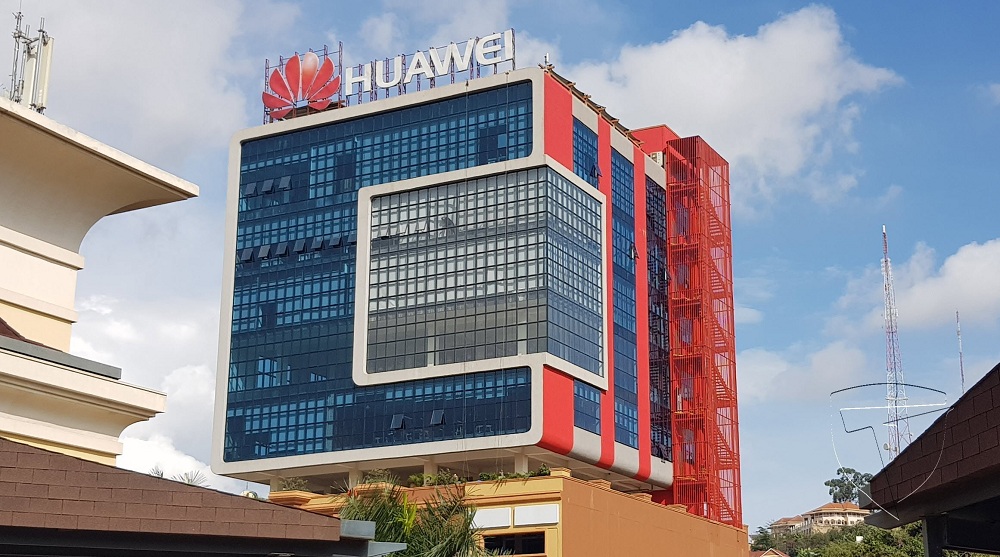
In its 2024 report entitled Foreign Influence on Civic Space in Uganda, civil society organisation The Collaboration on International ICT Policy for East and Southern Africa (CIPESA ) says that research has established that the tight relations between China and African governments make it difficult to identify and attribute the legal pressures that the Chinese exert in the African information system. However, the report adds that although it is impossible to categorically state that foreign influence has directly impacted Uganda’s legal framework, economic and social relationships between countries can facilitate the creation of laws that regulate the digital space and the use of digital technologies. For instance, CIPESA cites how the Uganda-China economic relations have facilitated the development of ICT infrastructure and enabled the importation and deployment of problematic technologies from the Asian country, which has had implications on Uganda’s digital civic space. China’s footprint on Ugandan’s digital and technological space has been clear because, starting in 2019, the East African country started to procure Closed- Circuit television cameras ( CTTV) from Chinese telecommunications giant Huawei Technologies Company Limited, on grounds that this was an effort to stem violent crime.
Opposition leaders had a different view, insisting that police would use the cameras, which have facial recognition technology, to target demonstrators. “ The intention of the cameras is known to track and prosecute critics of the Museveni regime,” said opposition leader Robert Kyagulanyi Ssentamu, popularly known as Bobi Wine, at a 2018 press conference in Kampala . In 2019, the American newspaper Wall Street Journal reported that Huawei technicians aided Ugandan intelligence agencies in cracking the encrypted communications of Kyagulanyi and later police foiled a music concert organised by the musician- turned -politician, which would have featured opposition speakers, and arrested him and dozens of supporters. Huawei has consistently denied the allegations, saying that its code of business conduct bars any employees from engaging in any activities that would endanger the data or privacy of its customers or end users, or that would breach any law.
Uganda is not an isolated case as it’s part of Huawei's Safe City initiative, which has been rolled out over the years in more than 200 cities worldwide, including in China, Pakistan and Russia. In Africa, Huawei – whose operations in the US have been restricted by the American government on the account that it could engage in espionage and theft of intellectual property – has sold CCTV systems to countries such as Kenya, Egypt and Zambia where activists have raised similar concerns over privacy and effectiveness.
In Zambia, the company was in 2019 accused of aiding then the administration of Edgar Lungu to intercept communication and social media activity of its opponents. Again, Huawei denied the accusation. Huawei has continued to make its presence in Uganda count because in July it announced plans to establish a digital village prototype which will constitute a network tower station, a solar power station with Huawei’s Digital Power Micro-Grid Station and a set of smart classroom equipment. Hover Goa, Huawei’s Vice President for Sub-Saharan Africa, linked such interventions to Uganda’s national strategy for rural development. Museveni, on his part, said the company has the political support it needs. “ Please go ahead with the project and I will commission it,” the president said.
In 2023, President Museveni launched a project entitled Huawei DigiTruck Project whose objective is to ostensibly provide free digital skills training for more than 10,000 beneficiaries over three years. To activists, Huawei’s moves are more than the development agenda that’s being marketed. “ We know that this technology is meant to profile and track people but they have fronted the idea of development. China has to sell its brand of governance and technology across the globe,” Nicholas Opiyo, a human rights lawyer, said in a phone interview with his writer on August 9, 2024.
Whilst Huawei has come to dominate Uganda’s digital infrastructure, there has been a secrecy of how the governments has been giving it contracts, with some saying that procurement laws are not being followed. “ We have no idea how Huawei got the contracts to supply Uganda with those CCTV cameras. “ All that we hear is that they have political support from the president,” Opiyo said. There’s a precedent that Museveni set when he intervened to see that Chinese companies – Sinhyrdo and China International Water and Electric Corporation and Electric – are awarded deals to construct the Karuma and Isimba dams, respectively.
In 2020, it was disclosed to parliament that Museveni directed the Attorney General, the Minister of Energy and Mineral Development, and the m inister of Finance to give the contracts to the Chinese after a meeting with the Chinese ambassador at State House Entebbe. “ Our friends from China are ready to help us build these hydropower plants,” Museveni said. Consequently, the Energy Minister in General Notice Number 572 of 2014, published on September 12, 2024 in the Uganda Gazette, confirmed the award of the construction contracts to the two Chinese firms .
As the world’s second-largest economy, China has become a crucial economic partner for numerous countries across Asia, Africa, and parts of Europe. However, while such development assistance is welcome, caution should be taken to guard against that support being used to support the abuse of rights and undermining of democracy.
