

By Mukembo Wilfred
Days after the General Court Martial in Makindye slapped treason-related charges against four-time presidential candidate and former Forum for Democratic Change (FDC) leader, retired Col. Dr. Kizza Besigye, and his close associate Hajji Obed Lutale, the Office of the Director of Public Prosecutions (DPP) has reportedly turned its focus to alleged financiers of Besigye within the Ugandan diaspora.

Security and prosecutorial sources say investigators are pursuing a list of Ugandans living abroad whom the state suspects of providing financial and logistical support to Dr. Besigye in what authorities describe as activities aimed at destabilising the National Resistance Movement (NRM) government led by President Yoweri Kaguta Museveni.
Among the names reportedly on the list are Twine Herbert, said to be living in Canada. Though not widely known publicly, sources claim that even during his time in Uganda as a businessman, Twine was among key financiers of the FDC and Diana Tusingwire, a Ugandan national currently based in the United States. Sources allege that Tusingwire played a key role in mobilising financial support from the diaspora for Besigye’s political activities.

Tusingwire is said to have previously served as an FDC polling agent during the 2016 general elections at Nyabubare Division in Igara County, Bushenyi District, in southwestern Uganda. According to sources, she fled Uganda shortly after the elections, citing threats to her life.
Sources further claim that following the 2016 polls, Tusingwire was arrested and tortured at the Chieftaincy of Military Intelligence (CMI) headquarters in Mbuya before later being released. She allegedly left the country soon afterwards when an opportunity arose, eventually settling in the United States.
Investigators allege that Tusingwire later became active in diaspora networks, mobilising individuals particularly financially, to support efforts they say were intended to topple the NRM government. Her inclusion on the alleged DPP list has raised fears among opposition-linked diaspora communities of an expanded crackdown beyond Uganda’s borders.
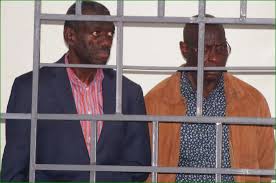
The developments come against the backdrop of Dr. Besigye’s high-profile arraignment before the General Court Martial. On November 20, 2024, Besigye was remanded to Luzira Prison after being charged with offenses related to endangering the security of the Uganda People’s Defence Forces (UPDF).
Appearing before the Makindye-based military court presided over by Brigadier-General Freeman Robert Mugabe, Besigye was charged alongside Hajji Obed Lutale and others still at large. Prosecutors allege that between October 2023 and November 2024, the accused held meetings in Geneva, Athens, and Nairobi, during which they sought logistical support and allegedly identified military targets in Uganda with the intention of undermining UPDF security.
The prosecution further claims that on November 16, 2024, Besigye and Lutale were found in unlawful possession of two pistols and eight rounds of ammunition while staying at Riverside Apartments in Nairobi. The firearms are described as models ordinarily reserved for defence forces.

Dr. Besigye strongly denied the charges. He said he had been denied access to his lawyers and family since his arrest. His lead counsel, Kampala Lord Mayor Erias Lukwago, challenged the jurisdiction of the General Court Martial, arguing that it lacks the legal mandate to try alleged offenses committed outside Uganda.
“The UPDF Act does not have extraterritorial application. The court has no universal jurisdiction. This is an absurd stretch,” Lukwago told the court, insisting that the alleged acts, including firearm possession in Nairobi, did not constitute offenses triable under military law.
Despite the defence’s objections, Brigadier-General Mugabe adjourned the proceedings to December 2, 2024, noting that the court would consider the legal submissions raised.
As the case unfolds, the reported move by the DPP to pursue alleged diaspora funders signals a widening legal and political battle, one that could further strain relations between the Ugandan state, opposition groups, and Ugandans living abroad.
