
By Kabuye Ronald
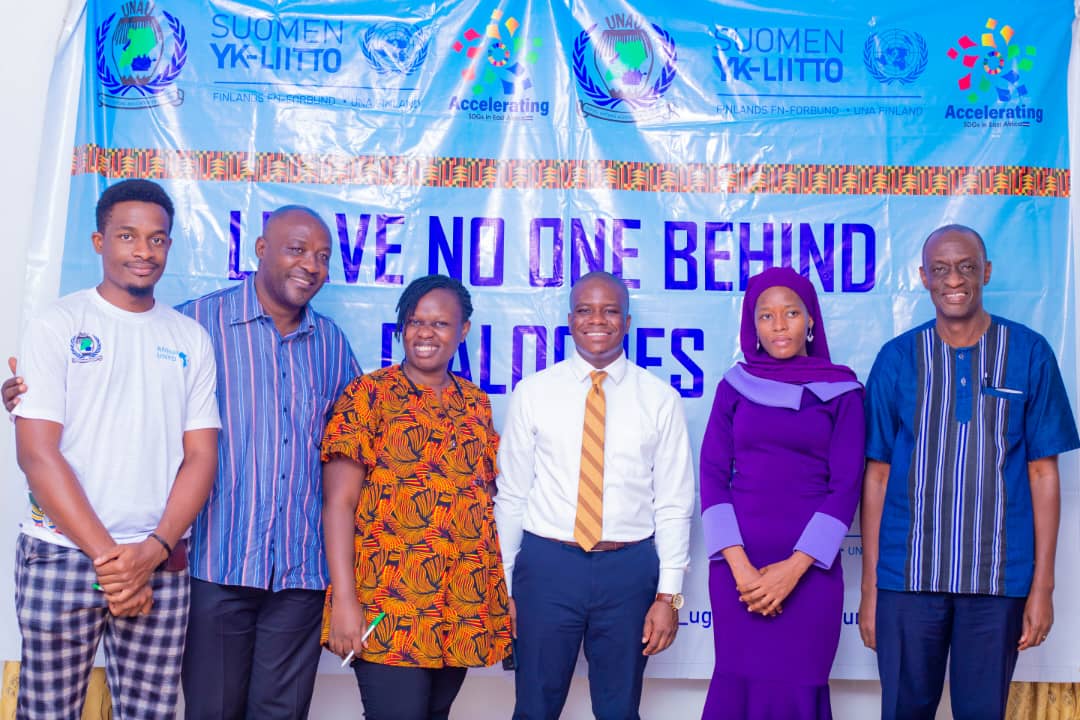
United Nations Association of Uganda UNAU together with its partners on Thursday held consultation engagement with journalists seeking for their input in the Voluntary National Review VNR Report that aims at assessing the progress of implementation of Sustainable Development Goals SDGs in the country which report will also presented to world in July 2024 in New York.

Richard Baguma Tinkasimiire, the UNAU Secretary General also member of the Global Executive of the World Federation of the United Nations Associations said that in the previous times the fourth estate or the voice of the media has often times not been deliberately and intentionally captured so that it also features in the VNR not only in Uganda but Globally.

“UNAU as a partner in collecting the views of Ugandans for VNR we said it is crucial that we convene some media people and we hear what are those issues as citizens that also hinders them professionally in contributing to the achievement of the SDGs especially goal 16 which is about the freedom of the media and generally the freedom and the ability to communicate” said Baguma
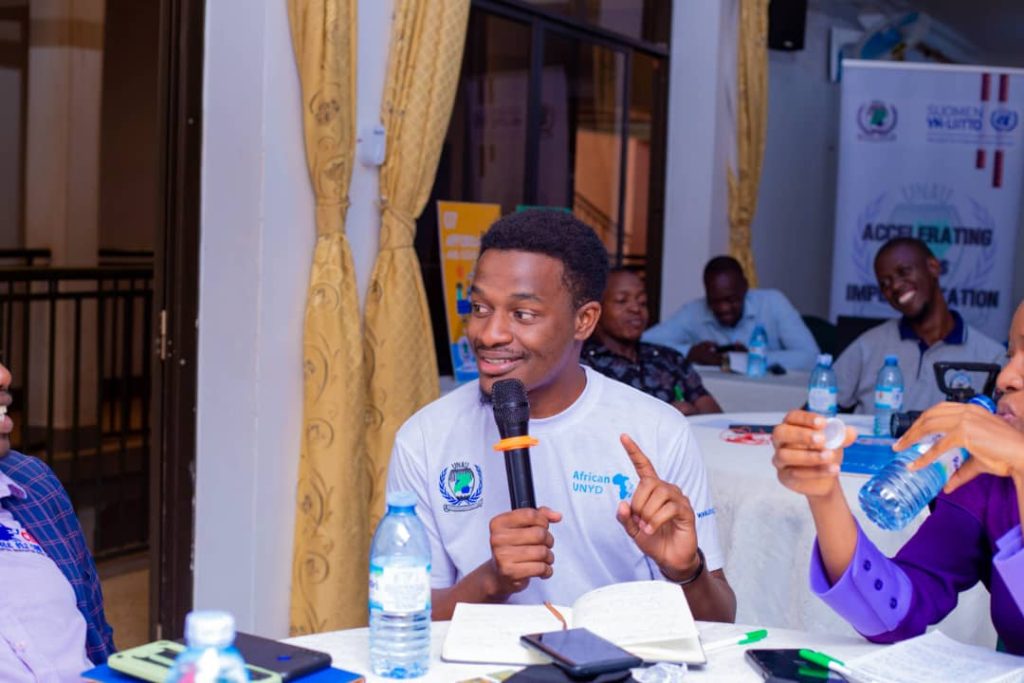
Baguma emphasized the pivotal role of the media in contributing to all the efforts aimed at sustainable development especially through creating awareness, knowledge and understanding of the deeper issues which hinder development but also create very important localized and community level discussions on how to get solutions to the sustainable development challenges.

He added that the media can also expose things that may be done by the duty bearers or the powerful in business, government, faith, traditional institutions, and civil societies among others to hinder the attainment of the sustainable development of the people. In addition to holding the people entrusted with power and governance accountable and mobilize the public to contribute to the progress of SDGs.
Some of the challenges highlighted by the media as hindering their work include: the shrinking media space especially in regards to violation of their rights, threats from the powers that be, Lack of Awareness, Limited Resources, Commercial Pressures where by In some cases, media outlets prioritize stories that generate higher viewership or revenue over those related to sustainable development, Political Interference, Complexity of Issues.

Others included Lack of Access to information, Audience Engagement where by journalists struggle to engage audiences who may perceive these topics as distant or irrelevant to their daily lives.
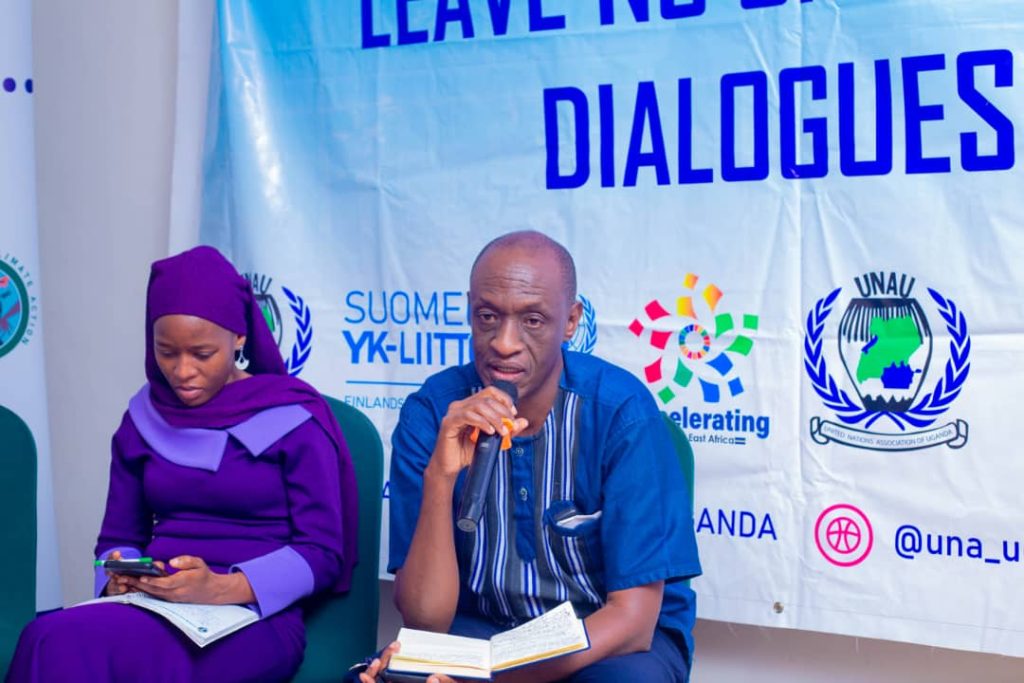
Linda Asaba, the programs coordinator at UNAU rallied the main stream media and social media to tell truth to power since that role others can’t do.
She said that in their own judgment the media is not doing all it can do in order to contribute to Sustain development since there are a lot of gaps and quite an amount of apathy and lack of investment and energy by the media in pushing all stakeholders to ensure the attainment of SDGs by 2030.
She urged the media to educate its self about the things that must be done so that it can easily explain to the everyday person about what the happening mean to them and this can be done by going in-depth on the issues, translating them into simpler and local languages but also engaging with the issues as personal by giving personal stories and testimony and telling truth to power.

According to the Sustainable Development Solutions Network and SDG Centre for Africa, Uganda is more than 50 percent of the way towards achieving SDGs by 2030. Among the 52 African countries, Uganda ranks the 18th position with an overall score of 54.88 (compared to the regional average of 52.7 in 2020)
In 2019, Uganda’s progress on SDGs was ranked 140 out of 162 countries with a global index score of 52.6 per cent declining from 125th position out of 156 Countries in 2018. According to the SDG Global Index, Uganda’s achievement is average, with moderate performance on SDGs 3, 8, 9, 13 and 15. SDGs 2, 5 and 6 have stagnated and the country is off-track in achieving SDGs 1, 11, and 16. There are also information gaps, with official data available for only 46.3% of SDG indicators applicable to the country context (United Nations Sustainable Development Cooperation Framework Uganda: 2021-2025).
The 17 sustainable development goals include: No poverty (SDG 1) Zero hunger( SDG 2), Good health and well-being (SDG 3), Quality education (SDG 4), Gender equality (SDG 5), Clean water and sanitation (SDG 6), Affordable and clean energy (SDG 7), Decent work and economic growth (SDG 8), Industry, innovation and infrastructure (SDG 9), Reduced inequalities (SDG 10), Sustainable cities and communities (SDG 11), Responsible consumption and production (SDG 12), Climate action (SDG 13), Life below water (SDG 14), Life on land (SDG 15), Peace, justice, and strong institutions (SDG 16), and Partnerships for the goals (SDG 17).
