
By Jumah Kakomo
The Uganda AIDS Commission (UAC) has reiterated that HIV/AIDS continues to be one of the most significant global health threats, despite a decline in prevalence rates over recent years.

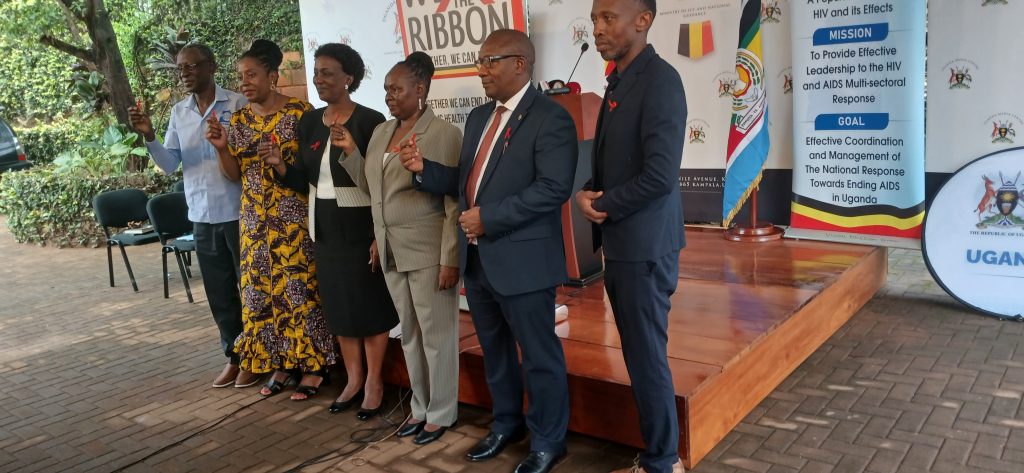
This announcement was made on Wednesday by Dr. Vicente Bagambe, acting director general of UAC, as the country prepares for the upcoming National AIDS/HIV Symposium scheduled for November 13, 2024.
Dr. Bagambe reported encouraging trends, noting that new HIV infections in Uganda decreased from 97,000 in 2010 to 38,000 in 2023—a 61% reduction. This decline is attributed to the scaling up of various prevention and treatment programs. Similarly, HIV-related deaths have fallen by 63%, from 53,000 in 2010 to 20,000 in 2023, largely due to the widespread availability of antiretroviral therapy (ART), which has been provided free since 2001.
However, the Commission expressed concern over the rising number of babies born with HIV, with 4,700 cases reported in 2024. Dr. Bagambe attributed this troubling statistic to women contracting the virus during pregnancy and delaying antenatal care, which heightens the risk of mother-to-child transmission. He urged increased awareness among pregnant women to seek early testing and treatment to prevent transmission.
Jacqueline Makokha, UNAIDS Country Coordinator, provided insights into the global HIV/AIDS landscape, emphasizing both progress and ongoing challenges. As of 2023, approximately 1.9 million adolescent girls and young women aged 15-19 are living with HIV, with 21,000 new infections in this demographic—representing a 51% reduction since 2010. However, Makokha cautioned that these figures fall short of the target to reduce new infections by 75% by 2023.

Despite a 36% global reduction in HIV/AIDS-related deaths among adolescent girls and young women, the figures remain concerning, with 21,000 deaths reported in 2023. In Sub-Saharan Africa, women account for 62% of all new infections, highlighting the need for targeted interventions.
Canon Dr. Ruth Ssenyonyi, Chairperson of the Uganda AIDS Commission Board, stressed the importance of increased funding for HIV programs, improved access to testing and treatment, and addressing social determinants that drive the epidemic. She called for collective action, equity, and a human rights-based approach to achieve the goal of ending HIV/AIDS by 2030.
