
By Jumah Kakomo and Kabuye Ronald
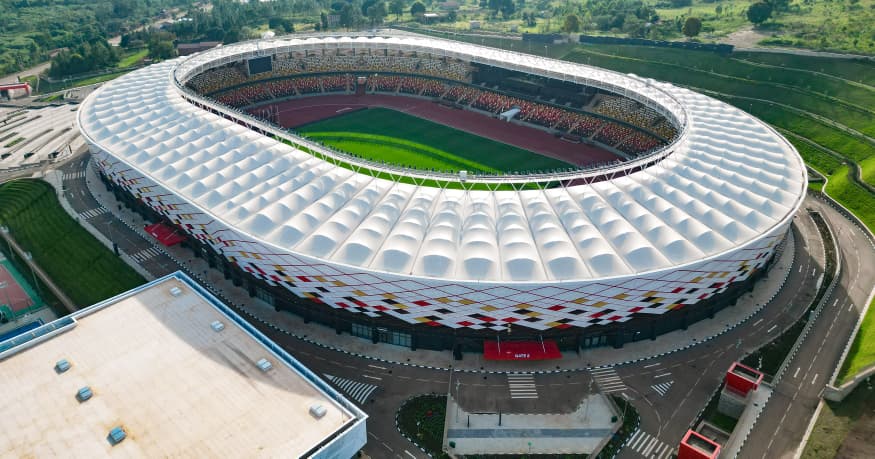
President Yoweri Kaguta Museveni has commissioned the 20,000-seater Hoima City Stadium in the Bunyoro sub-region, a USD 130 million investment that marks a major milestone in Uganda’s drive to strengthen sports infrastructure and position the country to host regional, continental and international sporting events.

The President, accompanied by the First Lady and Minister of Education and Sports, Maama Janet Kataha Museveni, said the completed facility demonstrates Uganda’s readiness to support large-scale developments in both the sports and hospitality sectors. He cited Hoima City Stadium alongside other key facilities such as Akibua Stadium in Lira City, Mandela National Stadium (Namboole), and several regional mini-stadiums scheduled for completion ahead of the 2027 Africa Cup of Nations (AFCON).
Construction of Hoima City Stadium began on September 1, 2024, and was executed by M/S Summa, a Turkish engineering and construction firm, under the supervision of the Ministry of Works. The project employed 1,067 workers, of whom 732 were Ugandans, highlighting the government’s commitment to local participation and skills development.
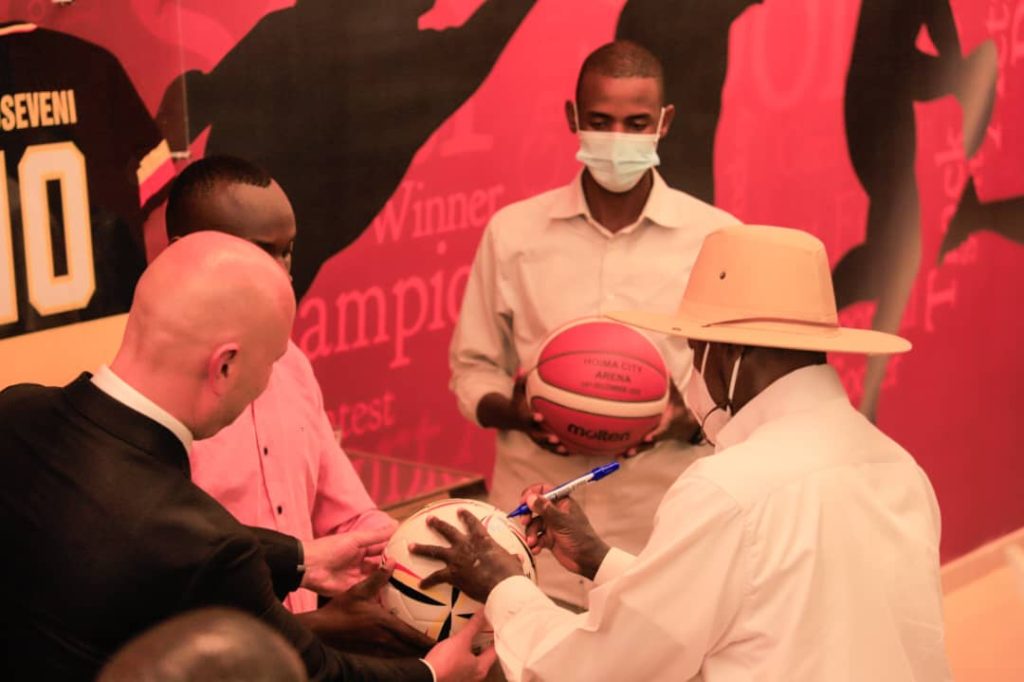
The project scope includes a 20,000-seater main stadium, a 2,000-seater indoor mini-arena, a semi-Olympic swimming pool measuring 25m by 12.5m, a standard 68m by 106m football pitch, outdoor training grounds, running tracks, two basketball courts and two volleyball courts. Additional facilities include 839 parking spaces, VVIP and VIP suites, a Presidential Suite, eight elevators, 59 sanitary units including 13 designed for persons with disabilities, four dressing rooms, a 50-seater press conference hall, and 10 concession and retail units.

President Museveni assured Ugandans that more such developments are expected as the country scales up oil exploitation programmes to finance strategic investments, including sports infrastructure. He dismissed critics who undermine Uganda’s development progress, emphasizing the National Resistance Movement’s prioritization strategy, which he said has delivered tangible results across multiple sectors.
The President further affirmed that Uganda is steadily achieving self-sustainability in key socio-economic areas and has the capacity to fund critical development initiatives through growth in agriculture, manufacturing and the services sector, including sports development. He also challenged the people and leaders of Hoima City to ensure sustainable management and proper utilization of the new stadium.
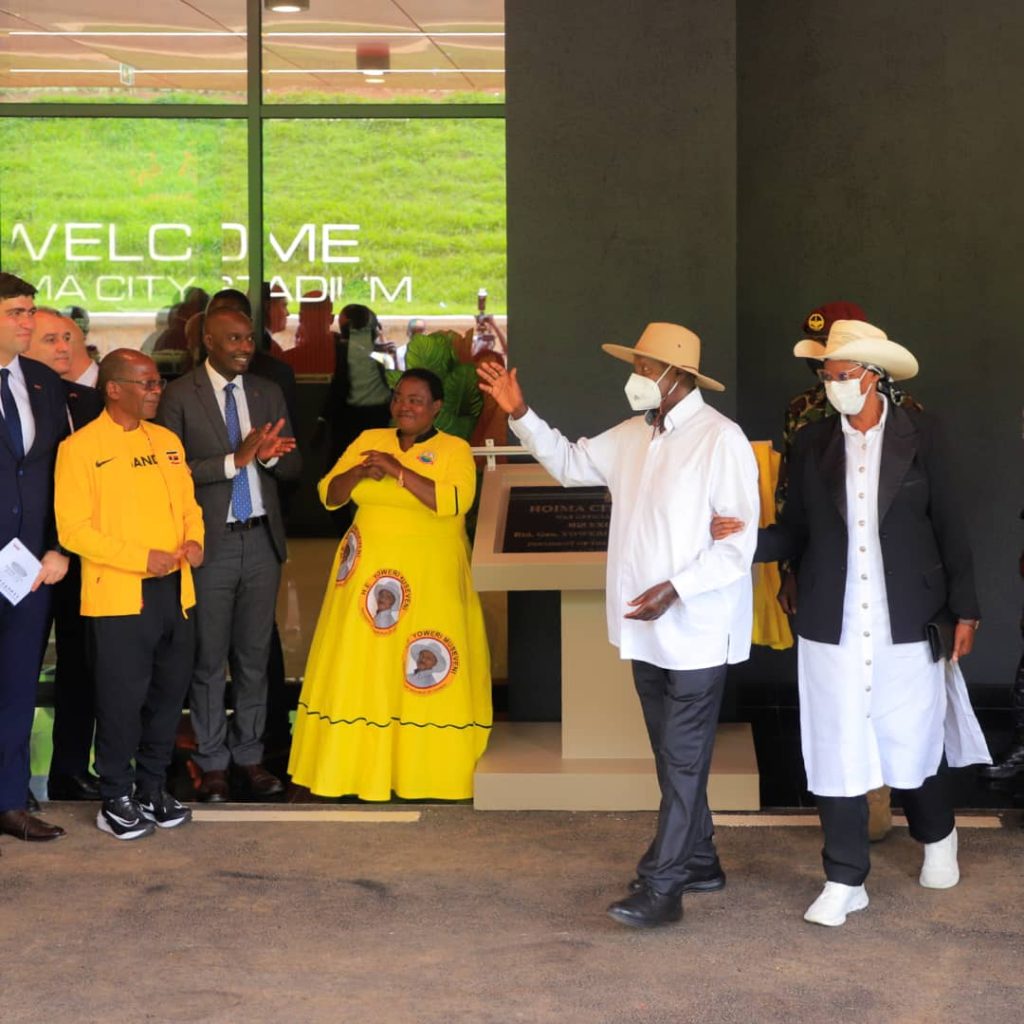
The First Lady and Minister of Education and Sports, Maama Janet Kataha Museveni, outlined the list of stadiums across the country earmarked for completion in preparation for the 2027 AFCON tournament. She noted that the timely completion of Hoima City Stadium reflects the government’s broader development vision for the Bunyoro sub-region, including flagship projects such as Bunyoro University, and urged residents to protect and preserve these investments.
She encouraged young people in the Bunyoro sub-region to take advantage of the stadium to nurture and showcase their talents, adding that plans are in place for professional management of the facility to generate revenue and sustain its maintenance costs. The First Lady described the stadium as a new benchmark for quality and timely delivery of government projects.
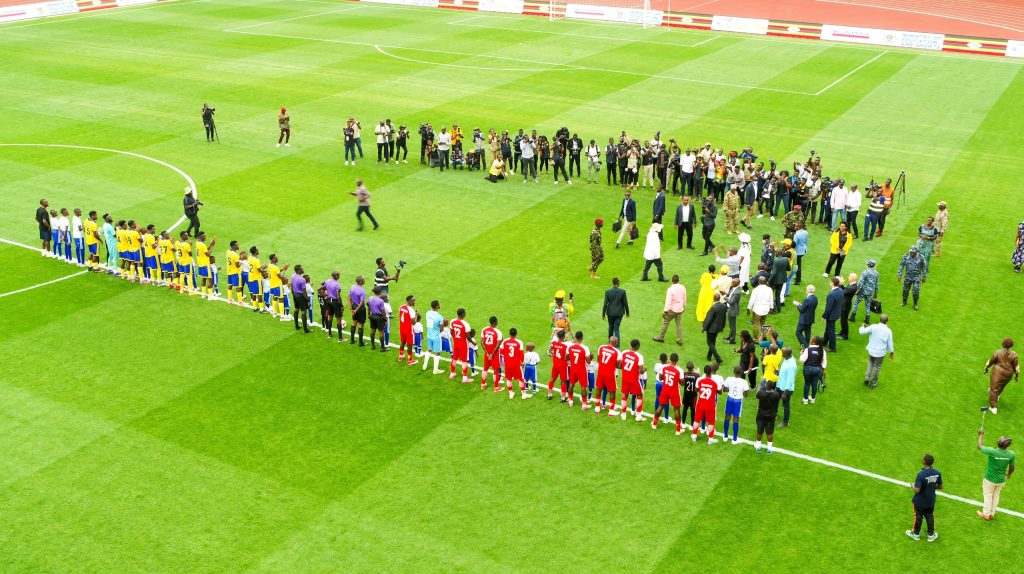
Hoima City Stadium was completed in 16 months, two months ahead of the planned 18-month timeline. Maama Janet Kataha Museveni praised the high-end quality of the works, describing them as exceptional and a model for future public projects.
State Minister for Sports Peter Ogwang tasked Hoima City leaders to enforce proper physical planning and development regulations around the stadium to safeguard its long-term value. He also detailed Uganda’s journey in delivering the project and highlighted the modern facilities and amenities within the complex.
The Turkish Ambassador to Uganda, Mehmet Fatih, said the project fostered valuable knowledge exchange between Turkish engineers and Ugandan professionals, further strengthening the cordial relations between the two countries. Meanwhile, the Chairperson of Summa International Construction Company, Selim Bora, outlined the project’s key features and its anticipated regional and national impact.
