
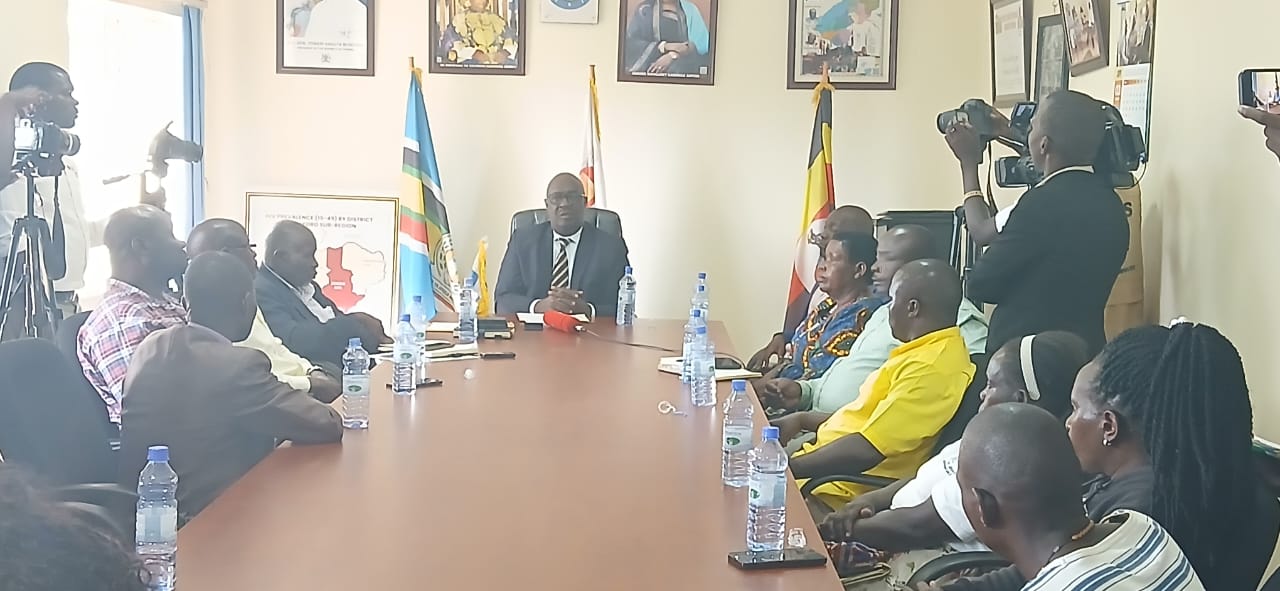
Sugarcane farmers under the Bunyoro Sugarcane Farmers Cooperative Union Limited have petitioned the Bunyoro-Kitara Kingdom, raising concerns over the alleged forceful removal of commercial weighbridges in Masindi District. The farmers claim the actions have led to exploitation, reduced transparency in trade, and worsening economic conditions for growers in the region.

In a petition presented on March 26 in Hoima, farmers said the sugarcane sector once provided a stable and profitable livelihood, supported by independently operated weighbridges that ensured accurate measurement of produce and fair pricing. However, they argue that this system has deteriorated due to the growing dominance of large sugar manufacturing companies, which they say has weakened cooperative structures and diminished farmers’ bargaining power.
The union’s chairman, Mahmoud Kazimbiraine, expressed concern over the removal of independent verification systems. He noted that farmers previously relied on private weighbridges to confirm the weight of their sugarcane before sale, but are now required to depend solely on factory-controlled systems.
According to Kazimbiraine, the situation dates back to a period when Masindi District produced surplus sugarcane that could not be fully processed by Kinyara Sugar Limited due to limited milling capacity. As a result, farmers began supplying cane to other factories, including those in Atiak, Kakira, Lugazi, and Victoria Sugar. At the time, the government supported this trade by subsidizing transportation costs from Masindi to Atiak.

To manage long-distance deliveries, farmers established private weighbridges where cane would be measured and handed over to millers. Kazimbiraine said this arrangement worked efficiently and benefited both farmers and buyers.
He further stated that, historically, Kinyara offered lower prices compared to other factories. For example, while Kinyara reportedly paid UGX 80,000 per unit of cane, factories in Busoga offered up to UGX 150,000. This price disparity encouraged farmers to transport cane over long distances, including to Jinja, while still maintaining profitability. Over time, sugarcane farming in the region expanded significantly, covering more than 15,000 hectares.
As cane transportation out of Masindi increased, Kazimbiraine alleged that Kinyara raised concerns, claiming that all sugarcane grown in Bunyoro belonged to the company and suggesting that cane leaving the region was stolen. Despite these claims, farmers continued to expand cultivation and later organized themselves into cooperative societies, eventually forming the Bunyoro Sugarcane Farmers Cooperative Union Limited.
The union subsequently established sugarcane marketing centers and additional weighbridges to streamline trade and reduce the need for farmers to travel long distances to factories such as Victoria Sugar in Luwero. Kazimbiraine also alleged that the expansion of large sugar companies in Bunyoro, including multiple factories linked to a single business group, has contributed to market concentration. He argued that this trend limits competition and undermines farmers’ ability to negotiate better prices.
The farmers further claim that accusations linking cooperative weighbridges to sugarcane theft are unfounded.
They allege that such claims have been used to justify the removal and destruction of weighbridges at sites including Rukondwa and Kihande along the Hoima–Butiaba road. According to the petitioners, these actions were carried out without due legal process.
The union is now calling for independent investigations into any alleged theft, urging that any offenders be prosecuted through established legal channels. They also demand the return and reinstatement of their weighbridges, as well as stronger legal protections for farmers and their property.
In response, the Prime Minister of the Bunyoro-Kitara Kingdom, Andrew Kirungi Byakutaga Ateenyi, acknowledged receipt of the petition and pledged to present the farmers’ concerns to both the kingdom authorities and relevant government institutions for further action.
The dispute highlights ongoing tensions within Uganda’s sugar industry, particularly around market access, pricing, and regulatory oversight, as stakeholders call for reforms to ensure fairness and sustainability in the sector.
