
By Racheal N. Namuli
Uganda’s Prime Minister, Robinah Nabbanja, has called on governments, researchers, professionals, the private sector, civil society organisations and development partners to ensure that policies discussed at international conferences are translated into concrete commitments and practical action.

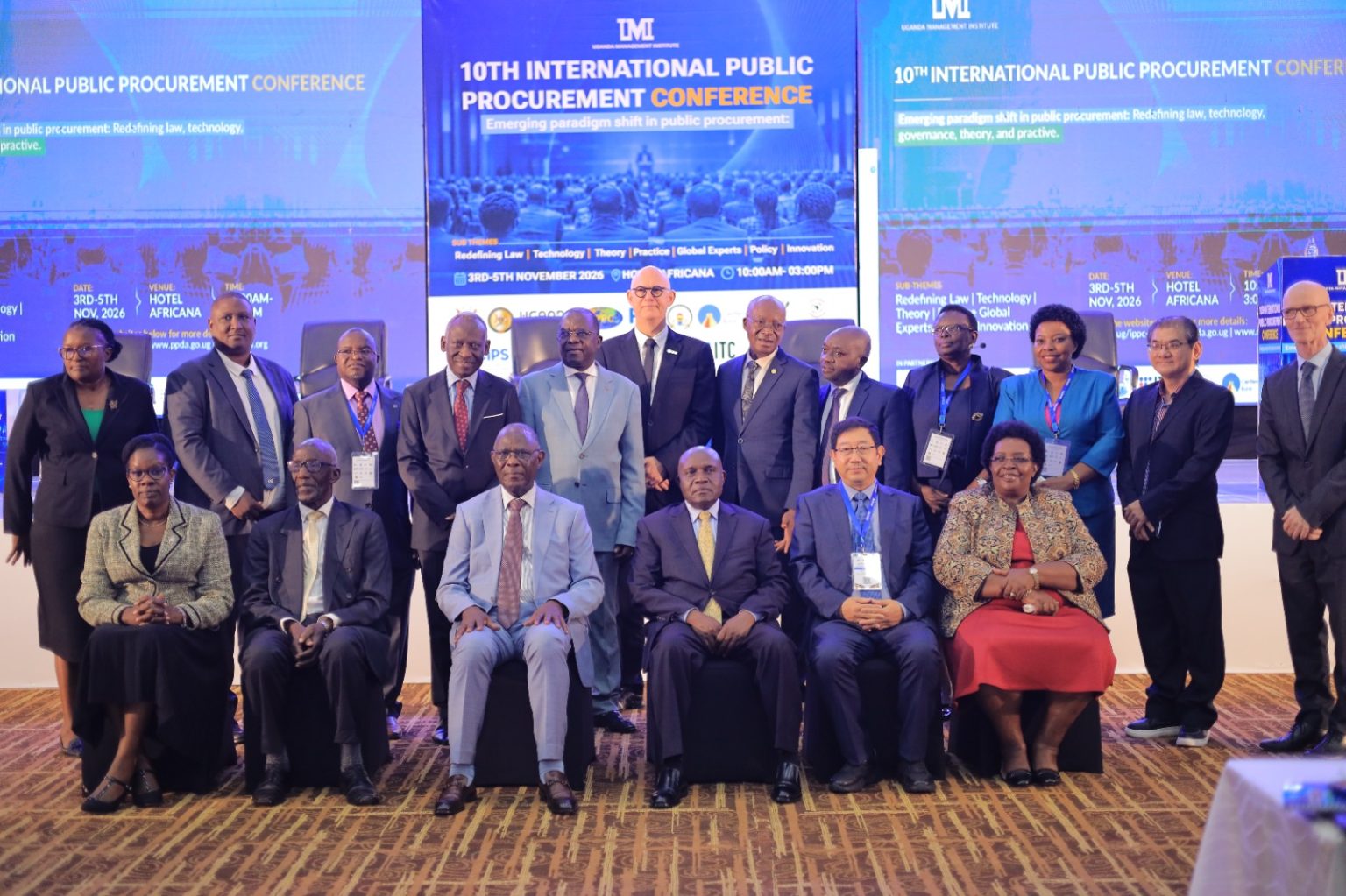
Nabbanja made the call during the 10th International Public Procurement Conference (IPPC), held at Hotel Africana on Tuesday, November 3, 2026, under the theme “Emerging Paradigm Shift in Public Procurement.”
In a speech delivered by her deputy, Dr Chrispus Kiyonga, Nabbanja emphasised the importance of coherent policies, effective institutional coordination and disciplined implementation in strengthening public procurement systems.

“As Prime Minister of Uganda, I recognise the importance of coherent policies, effective institutional coordination and disciplined implementation. These principles are relevant to governments across the world,” she said.
She added that strong procurement systems require more than sound legal frameworks, noting that they also depend on committed leadership, professional competence, effective oversight and the political will to take action whenever standards are violated.

The conference, organised by the Uganda Management Institute (UMI), attracted delegates from different countries and provided a platform for academic exchange and discussions on emerging trends and challenges in public procurement.
Speaking at the conference, UMI Director Professor James L. Nkata said the meeting had come at a time when the world was examining the growing role of artificial intelligence (AI) and the possibility of developing superintelligence capable of achieving or surpassing human-level intelligence.

Nkata emphasised that economic policies should ultimately serve human interests, warning that policies risk failing when they do not address the needs of the people.
“Economics is meant to secure humans, and the day it appears not to do so, then that policy suffers a stillbirth,” he said.
He also cited political philosopher John Stuart Mill, who argued that one of the most important qualities of any form of government is its ability to promote intelligence among its citizens.

Nkata further noted that public procurement across Africa accounts for approximately 17 per cent of the continent’s Gross Domestic Product (GDP), estimated at $535 billion.
He challenged participants at the conference to examine how much of this procurement expenditure remains within Africa and how the continent can maximise its benefits.
The UMI director also urged stakeholders to address the practical challenges affecting public procurement at all levels, from the smallest institutions to the largest organisations, in both developing and developed economies.
He said the discussions should focus on finding practical solutions that can improve procurement systems, strengthen accountability and ensure that public resources deliver meaningful benefits to citizens.
