
By Kabuye Ronald
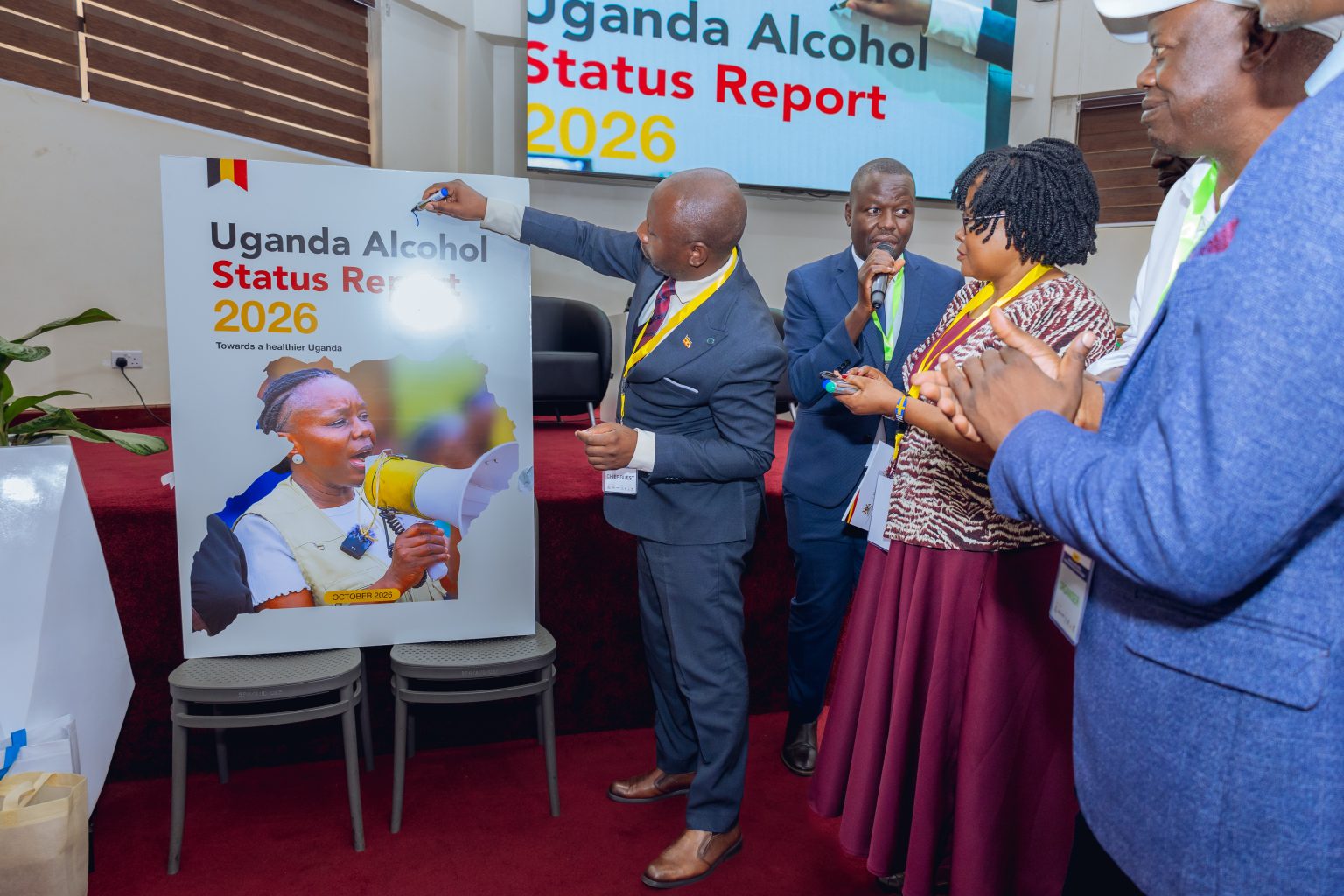
The burden of alcohol consumption in Uganda continues to grow, with the country recording an average of 12.2 litres of pure alcohol consumed per person annually, making it Africa’s leading alcohol-consuming nation and fifth globally, according to the Uganda Alcohol Status Report 2026.
The report by the Uganda Alcohol Policy Alliance (UAPA) paints a worrying picture of alcohol consumption in the country, highlighting its devastating effects on public health, families, livelihoods and the economy.
According to the findings, 42.6 per cent of Ugandans aged 15 years and above consume alcohol, with 54.5 per cent of drinkers classified as heavy drinkers. It is estimated that 17,065 die annually, equivalent to 46.57 per day, attributed to alcohol consumption. .

The report also raises concern about alcohol consumption among adolescents, revealing that 19.2 per cent of girls aged between 15 and 19 consume alcohol daily, compared with five per cent of boys in the same age group.
The findings were highlighted during the 5th Uganda Alcohol Policy Conference organised by UAPA in partnership with other stakeholders at Makerere University, where health experts, government representatives, academics, youth leaders and civil society organisations called for stronger alcohol regulation and increased public awareness.
Participants discussed the drivers of alcohol consumption, existing interventions and policy measures needed to protect communities from the harmful effects of alcohol, including deaths, school dropouts, loss of income, road accidents and other health-related complications.
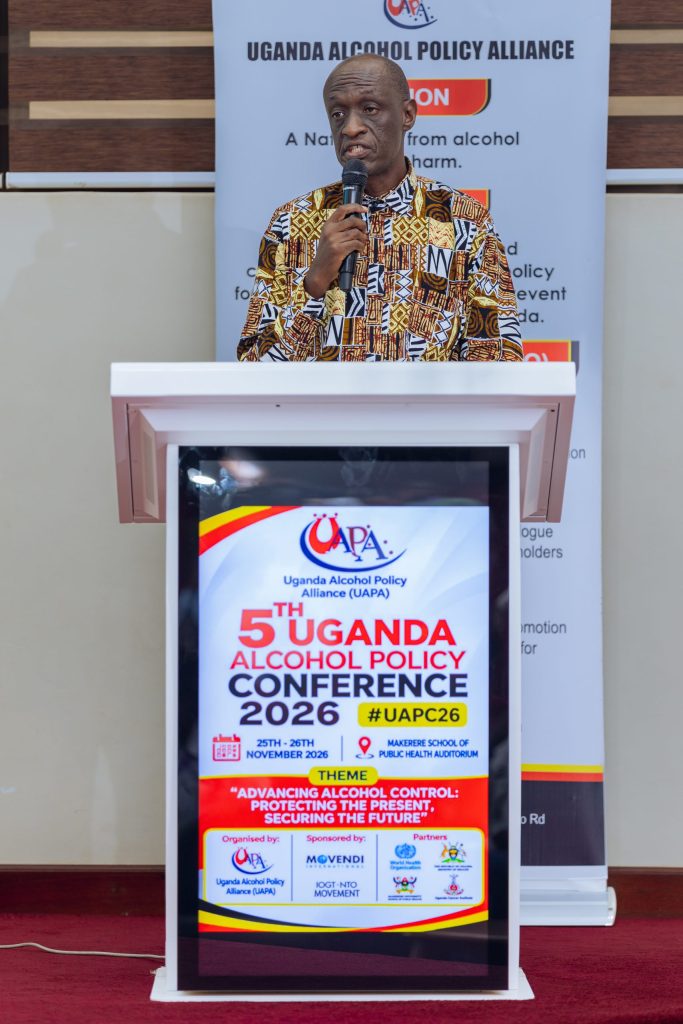
Richard Tinkasimire Baguma, Chairperson of the UAPA Executive Board.
Richard Tinkasimire Baguma, Chairperson of the UAPA Executive Board, said Uganda’s high alcohol consumption levels should not be celebrated but treated as a serious public health concern requiring urgent government intervention.
“It is not a badge of honour to be number one drinking country in Africa. So regulation must happen,” Baguma said.
He called for comprehensive legislation to regulate alcohol production, distribution, sale, consumption, advertising and sponsorship, noting that Uganda lacks an updated and evidence-based legal framework to address the growing problem.

Baguma also criticised unrestricted promotion of alcoholic beverages across different media platforms, saying aggressive advertising and sponsorship expose the public, particularly young people, to increased alcohol consumption.
“It’s promoted at every event, it’s promoted in every channel, radio, television, any publication, social media, digital platforms. Really, unrestricted promotion and advertising and sponsorship of the alcohol industry is wrong,” he said.
He further criticised alcohol marketing strategies that deliberately appeal to young consumers through sweet flavours, attractive packaging and advertising imagery associated with fashionable lifestyles.
Baguma said packaging alcoholic beverages in small containers makes them easier to carry and conceal, potentially exposing school-going children to underage drinking.
“The strategy of packaging alcoholic products in small containers makes them easy to carry and conceal, potentially exposing school-going children to alcohol,” he said.

He also questioned the use of flavours associated with cakes, chocolates and sweets in alcoholic beverages, arguing that such products could attract young consumers who might otherwise have little interest in alcohol.
Baguma expressed concern about advertising strategies targeting young women through images of expensive cars, fashionable lifestyles and attractive models.
“Young females are the newest market target. You see the nice cars, the nice young females and the imagery. We must talk about these things,” he said.
Mr Nsanga said Uganda’s high alcohol consumption levels were partly sustained by aggressive marketing, weak enforcement of existing regulations and the absence of a comprehensive national alcohol policy.
Dr Joyce Najjuma, a medical doctor in the Paediatric Department at Mulago National Referral Hospital, warned that alcohol consumption among children and adolescents could have serious consequences for their development.
She said consuming alcohol at an early age can interfere with brain development because children’s brains are still growing, while early exposure could also make it difficult for young people to stop drinking later in life.

Dr Najjuma said family environments play a significant role in influencing children’s drinking habits and urged parents to take greater responsibility by providing for their children’s basic needs, monitoring their behaviour and paying attention to the friends they associate with.
The report also indicates that alcohol consumption among people living with HIV is considerably high, estimated at between 33 and 50 per cent, compared with the general population.
Data from the Uganda Demographic and Health Survey (UDHS) further shows that alcohol consumption is particularly prevalent among middle-aged men.
Men aged 35–39 recorded the highest prevalence at 47.7 per cent, followed by those aged 40–44 at 45.7 per cent and 45–49 at 45.5 per cent.
Among women, those aged 40–44 years were identified as the leading age group in alcohol consumption.
Cultural leaders have also raised concern about the impact of alcohol consumption on families and communities, particularly among young people in northern Uganda.
Rwot John Lugai, a traditional leader from Pader Chiefdom, warned that excessive drinking had severely affected young people in the Acholi Sub-region, leaving some young men unable to establish families.
He said alcohol abuse had affected relationships and the ability of some young men to fulfil family responsibilities.
Meanwhile, Noah Kiyimba, Minister for Cabinet, Protocol and Special Duties in the Office of the Katikkiro of Buganda, called for stronger regulation of alcohol production, distribution and sale.
He warned that counterfeit, adulterated and illicit alcoholic products were exposing communities to serious health risks.
“We urge the government and regulatory authorities to intensify inspections of alcoholic products on the market to establish their contents and ensure compliance with safety standards,” Kiyimba said.
He also criticised political leaders who use alcohol to attract electoral support, saying leaders should instead promote responsible behaviour and community development.
Former State Minister for Health and Tororo Woman MP Sarah Opendi accused government officials and political leaders of frustrating efforts to introduce legislation aimed at controlling alcohol consumption.
Opendi, who moved the Alcohol Control Bill, said although political leaders acknowledged the need to regulate alcohol consumption, they often prioritised tax revenues generated by alcohol manufacturers while overlooking government expenditure on treating alcohol-related illnesses, road accidents and other consequences.
She criticised what she described as undue influence by key players in the alcohol industry on the Executive, arguing that their position as major corporate taxpayers should not undermine public health priorities.
Opendi urged government to adopt a common position on alcohol regulation and support the Alcohol Control Bill, warning that continued disagreements were undermining efforts to protect public health.
Meanwhile, Sam Babanza of Safe Transport and Survivors Support Uganda (STASSU) called for bus operators to be allowed to acquire and use reusable breathalysers to test drivers before they embark on journeys.
Babanza said relying solely on Police to detect drunk drivers was insufficient, particularly given the risks posed by drivers transporting large numbers of passengers.
“We can’t allow a drunk driver to drive a bus worth over 400 million shillings, full of passengers. Currently, it’s upon the Police to detect drunk drivers, yet if the National Drug Authority (NDA) allows businessmen to bring in breathalysers, many bus owners will be in position to purchase them,” he said.
He said the machines were relatively affordable on the international market compared with the potential cost of accidents resulting from alcohol-impaired driving.
Babanza also called on employers to introduce alcohol-testing equipment at workplaces, particularly for employees who drive vehicles transporting workers, to identify those reporting for duty under the influence of alcohol.
He urged women whose husbands consume alcohol excessively not to allow them to drive while intoxicated, warning that this could endanger their lives and those of other road users.
He further appealed to the public to exercise caution during the festive season and avoid excessive alcohol consumption.
Stakeholders at the conference called for stronger collaboration between government, health institutions, communities, civil society and law enforcement agencies to address alcohol-related harm through legislation, public education, community interventions and effective enforcement.
They emphasised that tackling the growing burden of alcohol consumption requires more than awareness campaigns, urging policymakers to prioritise effective regulation and sustained interventions to safeguard public health and livelihoods.
