
By Eric Yiga
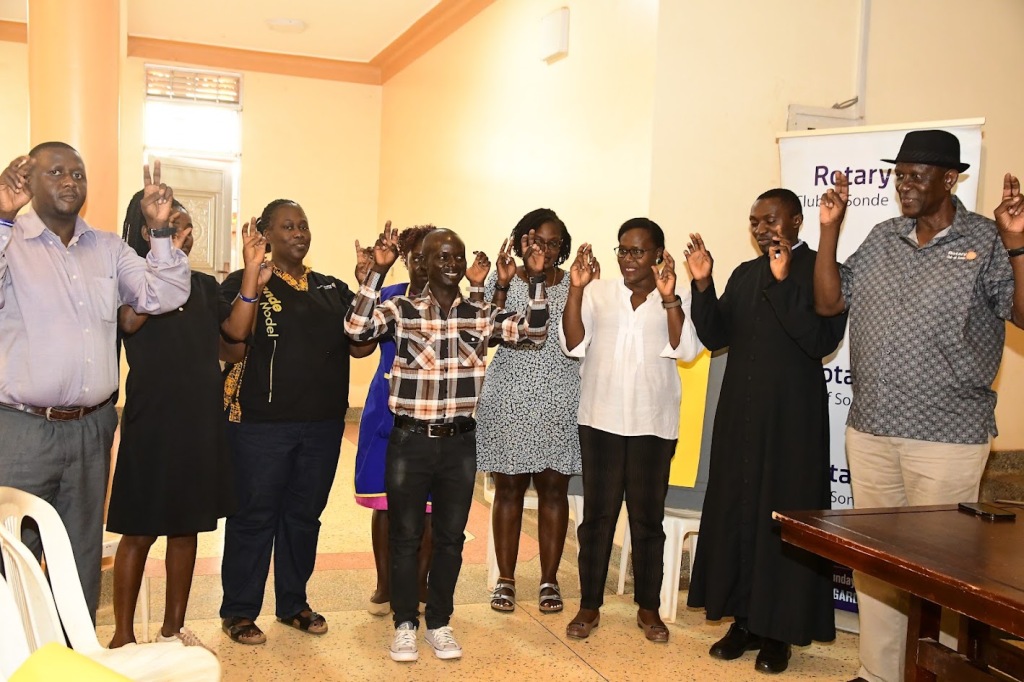
The Rotary Club of Sonde has launched a three-month sign language training programme aimed at breaking communication barriers and promoting the inclusion of people with hearing and speech impairments in community activities and service delivery.

The initiative, being conducted at St Gonzaga Kamuli Catholic Church in Sonde, Mukono District, is being implemented in partnership with Tsainet-Uganda.
It seeks to equip Rotarians, teachers, religious leaders and other community members with sign language skills to enable them to communicate effectively with people who are deaf or have speech impairments.
Club president David Nsalasanta said the initiative was inspired by the communication challenges experienced by a fellow Rotarian with hearing and speech impairments, which made the club realise the difficulties faced by people with similar conditions in their everyday interactions.
Nsalasanta said the club subsequently resolved to introduce sign language lessons to empower its members and other community stakeholders with practical communication skills.
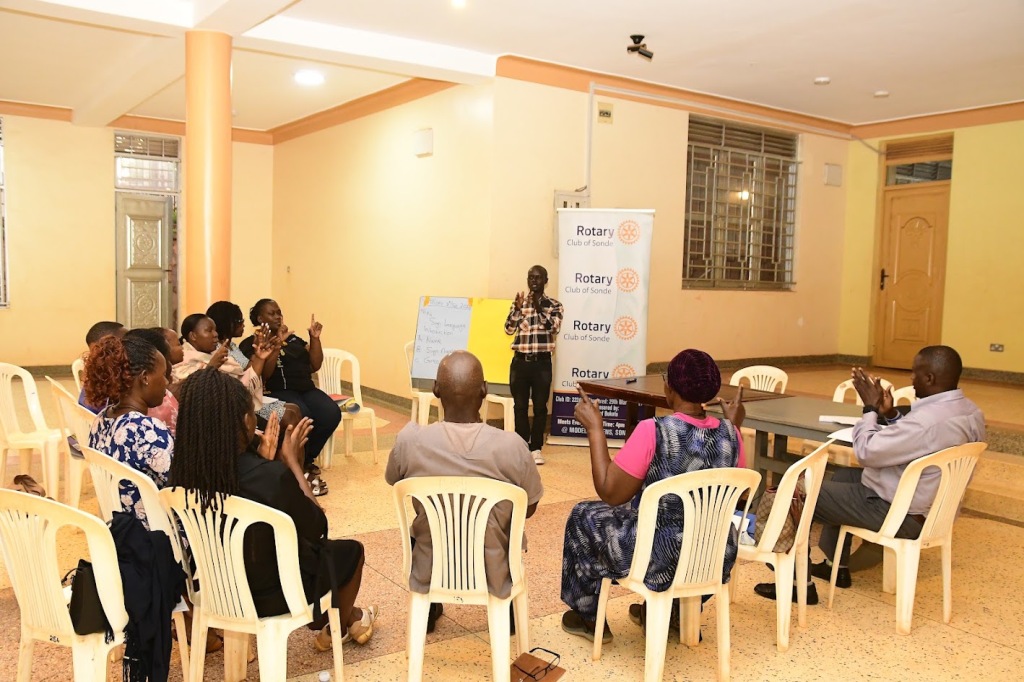
“We have a fellow Rotarian in our club who has communication challenges. We decided to introduce these lessons to enable us to communicate with him and other people facing similar challenges,” Nsalasanta said.
He said the programme started with 12 participants, comprising three Rotarians from Sonde, four teachers, two religious leaders and three other community members.
Participants who successfully complete the three-month course will be awarded certificates in recognition of the skills acquired.

Nsalasanta observed that the shortage of people proficient in sign language remains a major obstacle to the participation of people with hearing and speech impairments in community activities, including those organised by service organisations such as Rotary.
He said many people with such disabilities possess the abilities and willingness to contribute to society but are often excluded because those around them cannot communicate with them.
“Some people with hearing and speech impairments have the desire to participate in community activities and contribute to society, but communication barriers make it difficult for them to express themselves and interact with others,” he said.
He added that the club intends to train at least 15 people annually as part of its long-term strategy to promote inclusive communities.
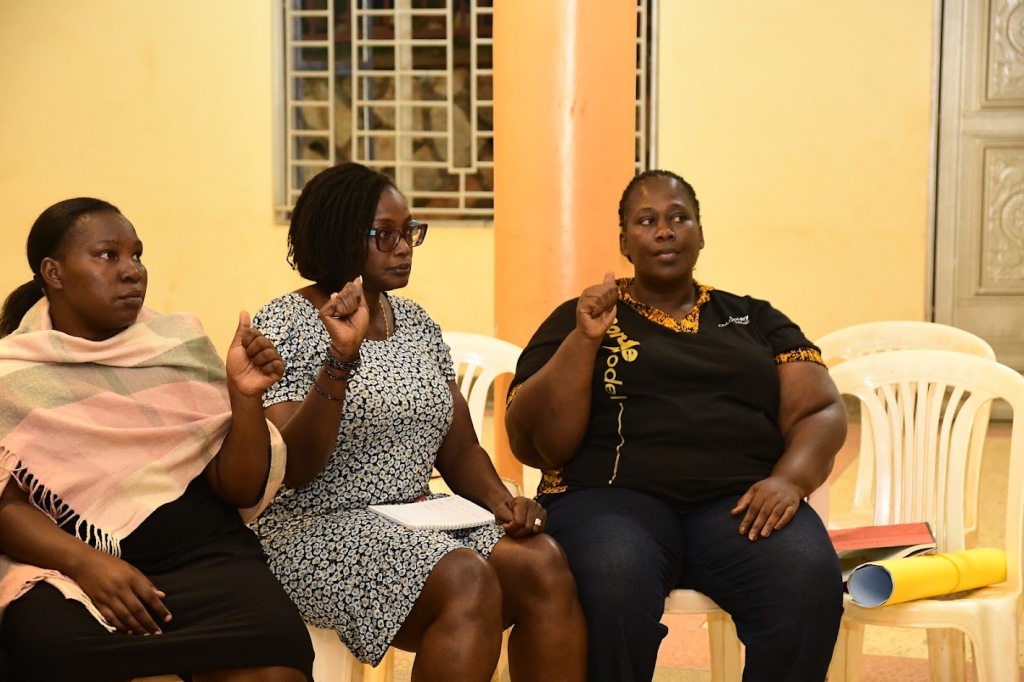
The programme will target Rotarians, teachers, religious leaders and community volunteers who are likely to interact with people with hearing and speech impairments in their respective workplaces and communities.
Rotarian Angella Nakitende said the training would strengthen her ability to serve communities by enabling her to communicate with people who are often left out because of communication difficulties.
She said the acquired skills would also help her better understand their concerns, particularly when accessing healthcare services.
“We serve different communities, but we have been facing challenges communicating with these people. This training will help me understand their concerns, including their health challenges and the medication they may need,” Nakitende said.
The Assistant Parish Priest of St Gonzaga Kamuli Catholic Church, Rev. Fr. John Bosco Matovu, welcomed the initiative, saying it would improve the Church’s ability to reach out to people with hearing and speech impairments.
Matovu said the Church had previously encountered difficulties communicating with people with such disabilities, particularly when preaching the Gospel, offering spiritual guidance and providing pastoral support.
He said learning sign language would enable religious leaders to extend their services to people who might otherwise struggle to follow church teachings and participate fully in religious activities.
He added that the skills would also help him reach out to people with hearing and speech impairments beyond the church premises.
Hilda Kenom, a Rotarian from Upper Kololo, said the programme was particularly important to her because she has a sister with hearing and speech impairments, with whom communication has often been challenging.
Kenom said the training presented an opportunity to overcome the communication difficulties within her family and strengthen her relationship with her sister.
She expressed optimism that the lessons would equip her with the ability to understand her sister better and communicate with her more effectively.
Teachers participating in the programme said the training would also strengthen their professional capacity, particularly in supporting learners with hearing and speech impairments.
They said acquiring sign language skills would enable them to communicate with such learners, understand their educational needs and support their participation in classroom activities.
The teachers added that the knowledge would provide them with an opportunity to support inclusive education by ensuring that children with disabilities are not denied access to learning because of communication barriers.
Meanwhile, Rotary District 9213 Assistant Governor Susan Kamazima, from the Rotary Club of Nakawa, contributed sh500,000 towards facilitating the programme.
The financial support is intended to assist in facilitating the sign language trainer and purchasing the curriculum materials required for the training.
The contribution is expected to support the smooth implementation of the programme and equip participants with the necessary learning materials.
The initiative reflects Rotary’s broader commitment to community service, inclusion and improving the welfare of vulnerable groups.
Through the training, the Rotary Club of Sonde hopes to create a community where people with hearing and speech impairments can communicate freely, access essential services and participate in social, religious and educational activities without discrimination.
