
By Kabuye Ronald
Uganda is facing a growing alcohol-related public health and economic crisis, with an estimated 17,065 deaths annually, equivalent to 46.57 per day, attributed to alcohol consumption. This represents approximately 7.5 per cent of all deaths in the country, according to the Uganda Alcohol Status Report 2026.
The report estimates that 13,684 of these deaths occur among men, representing 10.6 per cent, while 3,382 occur among women, accounting for 3.4 per cent.
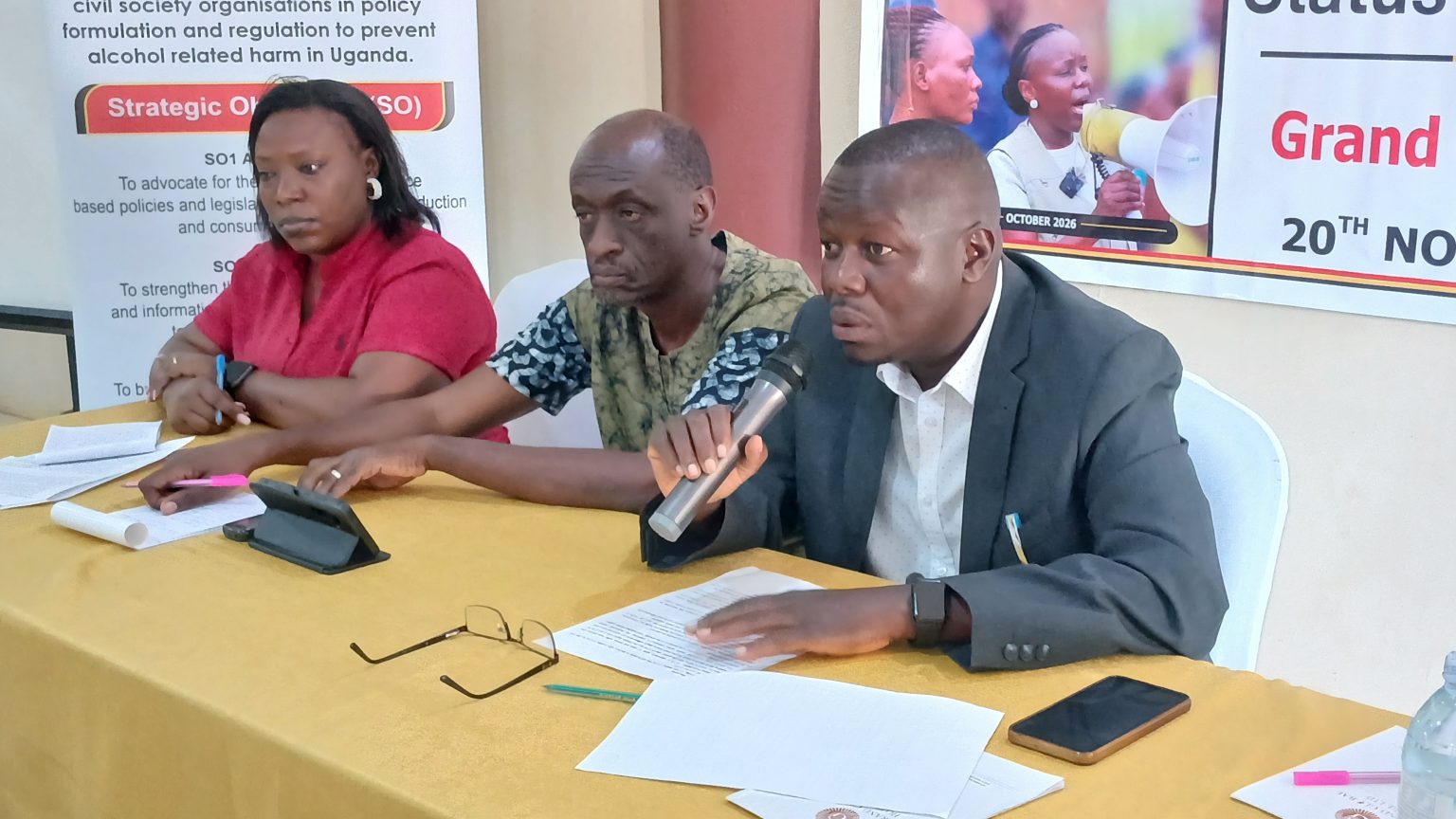
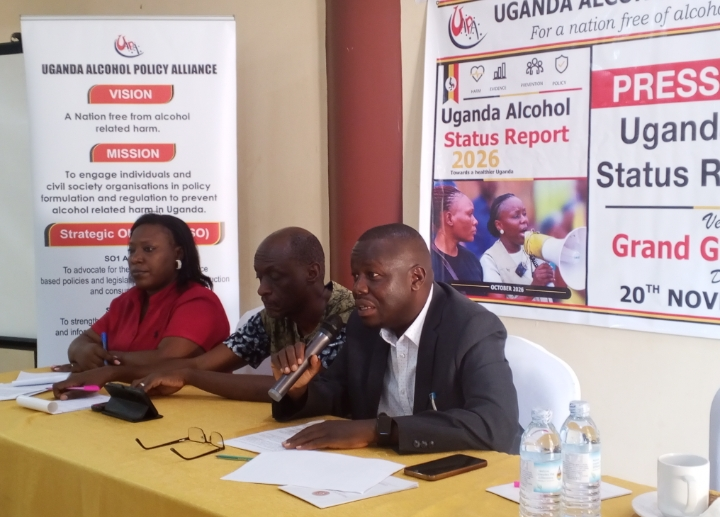
The findings were disclosed on Friday during a press briefing in Kampala on the Uganda Alcohol Status Report 2026, organised by the Uganda Alcohol Policy Alliance (UAPA) ahead of the 5th Uganda Alcohol Policy Conference 2026.
The report ranks Uganda as the country with the highest alcohol consumption in Africa and fifth globally, with an estimated average consumption of 12.2 litres of pure alcohol per person annually.
It further indicates that approximately 42.6 per cent of Ugandans aged 15 years and above consume alcohol, while 54.5 per cent of those who drink are classified as heavy drinkers.
Alcohol consumption is particularly high in certain population groups. The report estimates prevalence at 48.5 per cent in fishing communities, while among people living with HIV, alcohol consumption ranges between 33 and 50 per cent.
Significant gender differences were also identified, with alcohol consumption estimated at 46.1 per cent among men compared with 15.3 per cent among women. Women in Karamoja and the West Nile region were also identified as groups requiring particular attention.
Of further concern is the prevalence of heavy episodic drinking among adolescents and young adults, with harmful drinking patterns potentially undermining their health, education, academic performance and future productivity.
The report also identifies several factors associated with alcohol consumption, including being male, low socioeconomic status, lower levels of education and residence in rural communities.
Dr David Kalema, one of the researchers involved in the review, said alcohol consumption should not be viewed merely as an individual lifestyle choice but as a major public health concern with far-reaching consequences for families, communities, the national economy and Uganda’s development aspirations.
The report is based on a comprehensive review of evidence covering the past ten years, conducted by a team of five health experts and commissioned by UAPA. It examined trends in alcohol consumption, alcohol-related harm and the effectiveness of existing prevention and control measures in Uganda.

The review drew on information from the World Health Organization (WHO), the Government of Uganda, particularly the Uganda Demographic and Health Survey, academic research institutions and civil society organisations.
Kalema said the findings were particularly concerning because they demonstrate that alcohol consumption is widespread and associated with drinking patterns that expose individuals, families and communities to significant health and social risks.
He highlighted alcohol use disorder as another major concern, noting that an estimated 12.4 per cent of Ugandans aged 15 years and above experience the condition.
According to the report, this is substantially higher than the global prevalence of 7.0 per cent and the African regional rate of 6.3 per cent.
Kalema said the figures demonstrate the need for a stronger public health response rather than leaving individuals and families to manage the consequences on their own.
Alcohol-related harm contributes to non-communicable diseases, injuries, mental health challenges, family instability and increased pressure on an already overstretched health system.
The review further estimates that alcohol-related harm costs Uganda approximately Shs11 trillion annually, representing a significant economic burden for a country pursuing economic transformation, poverty reduction and improved household incomes.
Despite some existing interventions, including provisions under the Roads and Traffic Act, the Kawunyemu campaign and alcohol taxation measures, Kalema said Uganda continues to face significant gaps in alcohol regulation.
He noted that the country lacks a comprehensive national alcohol control law, while only 14.6 per cent of districts reportedly have alcohol-related regulations.
He further observed that alcohol remains relatively cheap and widely accessible, making it difficult to prevent harmful consumption, particularly among young people and low-income populations.
The Acting Chairperson of the UAPA Board, Richard Baguma Tinkasiimire, called for urgent and coordinated government action to address the growing burden of alcohol-related harm in Uganda.
He urged the media, policymakers and the general public to break the silence surrounding alcohol consumption and its consequences, observing that the problem is more widespread in Ugandan society than many people are willing to acknowledge.
Tinkasiimire noted that many people either experience alcohol-related challenges personally or know someone close to them who is affected.
He challenged journalists, editors and media producers to recognise that alcohol-related harm also exists within their own workplaces and families, rather than portraying it as a problem affecting only other sections of society.
“We are ashamed of the fact that alcohol is affecting us, so we tend to externalise this issue. But I would bet that there is not a single newsroom in this country that does not have somebody struggling with alcohol-related problems,” Tinkasiimire said.
He emphasised that alcohol dependence should not simply be treated as a moral failing or a lack of personal discipline, but as a public health concern requiring compassion, evidence-based interventions and appropriate support systems.
“We must talk about this. We must overcome the shame. We cannot sit back and pretend that this problem does not exist. It is not simply a problem of morality; it is a health problem,” he stressed.
Tinkasiimire also highlighted the economic inequalities that limit access to treatment and rehabilitation, particularly among low-income households and working-class families.
He observed that many families cannot afford the cost of keeping relatives struggling with alcohol dependence in rehabilitation facilities, leaving vulnerable individuals without the professional assistance they need.
“Why are we particularly concerned about low-income people? You cannot sustain a person in a rehabilitation facility on the kind of salaries many of us earn. Journalists, I have worked in the newsroom, and I know what we get paid. You cannot afford to sustain your brother, sister or child in rehabilitation with such an income,” he said.
He called on government to strengthen access to treatment and rehabilitation services, expand prevention programmes and introduce policies that protect communities from alcohol-related harm.
He also urged Ugandans to hold government and other responsible institutions accountable, arguing that addressing the problem should not be left solely to affected individuals and their families.
Tinkasiimire called on citizens to demand action from elected leaders, government ministries, policymakers and public institutions responsible for allocating and managing national resources.
“We must push government. We must push the responsibility holders, the people we vote for, the people who hold our budgets and the people who spend our taxes. We must hold them accountable to ensure that they address the problem of alcohol harm in this country,” he said.
He stressed that reducing alcohol-related harm requires stronger political commitment, adequate public investment and comprehensive interventions.
Meanwhile, Aturinde Mpairwe Prudence, a board member of UAPA, called for collective action and stronger alcohol regulations to address the growing social and economic consequences of harmful alcohol consumption.
She expressed concern that harmful drinking continues to undermine household welfare, community development and national productivity, noting that its consequences extend beyond individuals who consume alcohol to their families and society at large.
“The situation on the ground is not good at all. We are witnessing low productivity, with some people waking up in the morning and the first thing they think about is going to consume alcohol,” Prudence said.
She also highlighted the impact of alcohol consumption on children’s education, noting that some families struggle to meet school-related expenses because household resources that should support education are instead spent on alcohol.
Prudence further raised concerns about domestic violence and other social challenges associated with harmful alcohol consumption, particularly their impact on family relationships and household well-being.
The findings of the Uganda Alcohol Status Report 2026 highlight the need for a coordinated national response involving government, policymakers, public health professionals, civil society organisations, communities and development partners.
Among the key priorities identified are strengthening alcohol regulation and safeguarding public health policies, investing in prevention programmes, protecting vulnerable populations and expanding access to treatment and rehabilitation services.
The report also underscores the importance of community participation in addressing harmful alcohol consumption through public awareness, early intervention and accountability.
Stakeholders argue that without stronger regulatory measures, sustained public investment and coordinated prevention efforts, alcohol-related harm will continue to place pressure on Uganda’s health system, household incomes, social welfare and national development.
