
By Hannah Marion Namukasa
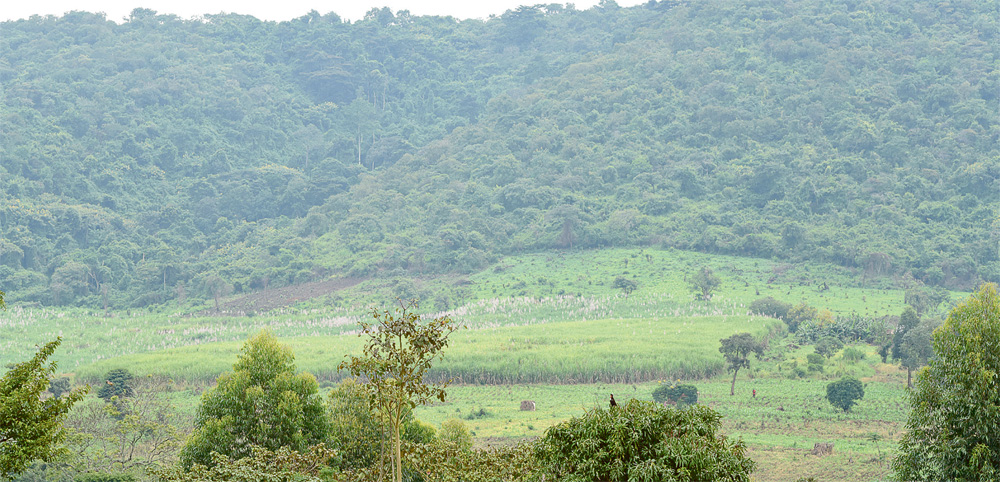
Kampala High Court civil division Judge Musa Ssekaana dismissed cases in which Civil Society Organizations were challenging the legality of the Environment and Social Impact Assessment (ESIA) report approved by National Environment Management Authority (Nema) for sugarcane growing on part of Bugoma Forest land.
Justice Sekaana ruled that the Certificate of approval granted to Hoima Sugar limited for the proposed Kyangwali mixed land use in the disputed part of Bugoma Central forest reserve in Kikuube District was legally issued.
“The key stakeholders were consulted and they made written representations but the applicants seem to argue as if no consultation was ever made before the certificate of approval was made,” the judge ruled.
The court observed Nema sent a copy of the ESIA to National Forestry Authority NFA and other stakeholders who made comments to the entire project and which comments were addressed before the approval of the project.
The standard of consultation under the particular statutory context was satisfied since it is a general principle of fairness that the consulted party is able to address the concerns of the decision-maker. The concerns of the stakeholders and especially the National Forestry Authority and Wildlife Authority were considered and this evidence is clearly set out on the court record,” the justice Sekaana ruled.
In his ruling, Justice Sekaana asserted that the civil society bodies brought the application before court to attract public attention.
“The complainants in order to attract the attention of the public and also to justify their existence as bodies concerned with environment protection and awareness are trying to make all sorts of unsubstantiated allegations to win public sympathy. Courts of law are strictly guided by the law and sensationalism should never be used to sway court in any matter.” Ruled Sekaana
Three conservation organizations; Water & Environment Media network (U) ltd (WEMNET-U), National Association of Professional Environmentalists (Nape) and Africa Institute for Energy Governance (Afiego) had petitioned the court in two separated cases which were later merged into one by court.
Through their lawyers, the organizations were seeking for a court declaration that the approval of the Environmental and Social Impact (ESIA) Statement and the NEMA issuing of the Certificate of Approval of ESIA Certificate to Hoima Sugar Limited for the Kyangwali Mixed Land Use Project was marred by flaws, procedural irregularities and without due recourse to the relevant provisions of the laws and regulations.
They contended that the NEMA’s decision to issue a Certificate of Approval was illegal and procedurally improper for not conducting a public hearing and or allowing public participation in decision making.
They argued that the process denied the interested parties including themselves a chance to effectively put forth their views aimed at protecting their rights to a clean and healthy environment.
The judge observed that it appears the complaints were premised on distorted facts and the NGOs attempted to suppress the real facts in order to make ‘flowery’ case in court by exaggerating that the entire forest is being cleared for sugarcane planting or that 5000 hectares (21 square miles) of the forest is being cleared for sugarcane growing.
“This is not true and it is an alarmism since out of the entire leasehold certificate of title issued to Hoima Sugar Limited, they are supposed to plant sugarcanes on 5,579 hectares against a total area of 2,393.8483 hectares which is less than half. Secondly, the Bugoma Central Forest Reserve is still intact and Hoima Sugar Limited has been directed to undertake enrichment planting covering an area of 3.8919sq miles and must carry out regulated activities,” Justice Ssekaana.
Justice Ssekaana ruled that the court is satisfied that the community was duly consulted and heard their views about the project and the court is not persuaded by the complainant’s argument that the people consulted were few in absence of any evidence to the contrary.
According to the court decision, Nema Executive Director was not bound to hold any public hearing premised on rules since there was no controversy and there are no transboundary impacts.
