
By Kabuye Ronald
The Uganda Human Rights Commission on Wednesday released its 28th Annual Report for 2025, revealing growing concerns over human rights violations, delayed justice for victims, and the escalating crisis of drug and substance abuse among Uganda’s youth.
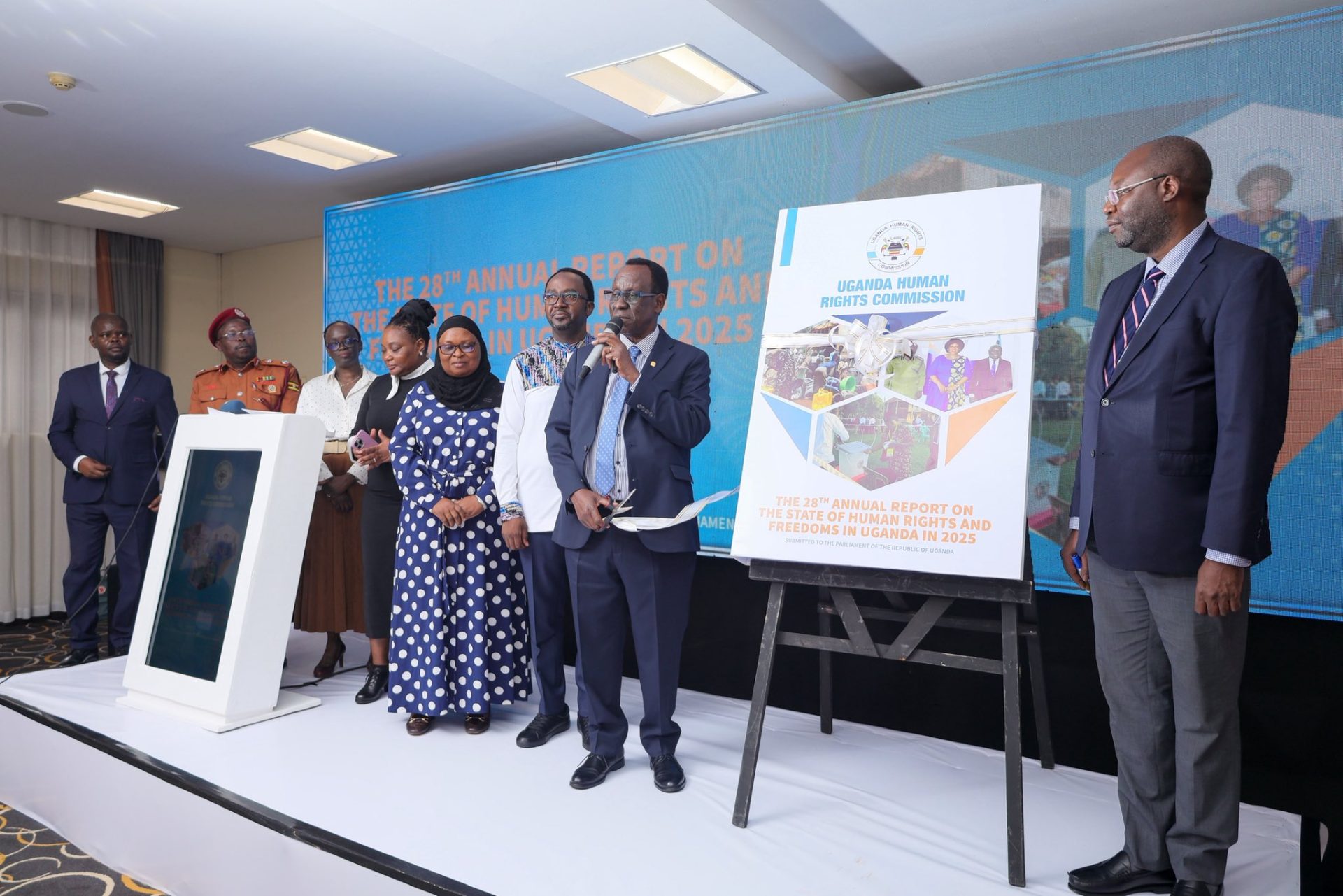
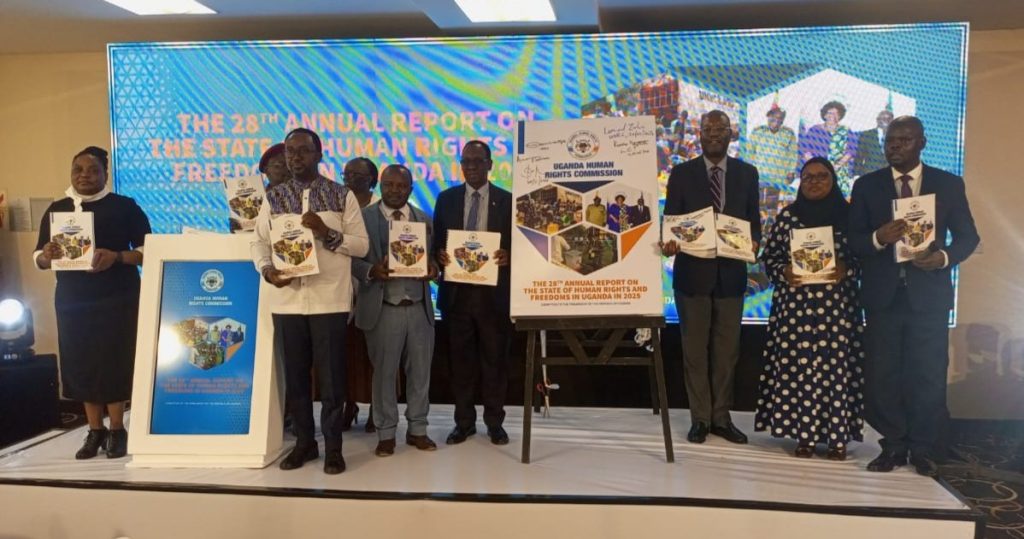
The report, launched by Lamex Omara Apita on behalf of Commission Chairperson Mariam Wangadya, highlighted the commission’s achievements, challenges, and recommendations aimed at strengthening human rights protection and accountability in the country.

Speaking during the launch, Omara Apita urged both state and non-state actors to implement the report’s recommendations, emphasizing that the publication was intended to promote constructive engagement and democratic governance rather than merely criticize institutions.
“The annual report is not just for critiquing, but rather to constructively engage all stakeholders towards fostering accountability, transparency, democratic governance and respect for human rights,” he said.
He further noted that protecting human rights is a collective responsibility and called on Ugandans to promote dignity, equality, tolerance, and justice.
According to the report, the commission received 1,747 complaints in 2025, of which 324 involved alleged human rights violations.
The Uganda Police Force registered the highest number of complaints at 181 cases, followed by private individuals with 85 complaints and the Uganda People’s Defence Forces with 37 complaints. Other complaints were lodged against ministries, departments and agencies, as well as the Uganda Prisons Service.
Deprivation of personal liberty emerged as the most reported violation with 133 complaints, followed closely by allegations of torture at 117 cases and denial of child maintenance at 74 cases.
In carrying out its constitutional mandate, the commission investigated 1,011 complaints, mediated 81 disputes, and referred 3,183 complaints to relevant institutions for further management.
The UHRC Tribunal heard 252 cases during the year and resolved 131 complaints. Victims of human rights violations were awarded compensation totaling UGX 885 million, covering abuses related to the right to life, personal liberty, and freedom from torture.
However, the report raised concern over delayed compensation payments to victims, a growing case backlog, inadequate resources for investigations, and the continued use of a manual complaints management system that slows case tracking and follow-up.
The report also highlighted the increasing misuse of alcohol and illicit drugs, warning that the trend is eroding the health, dignity, and opportunities of millions of Ugandans, particularly young people who make up 75 percent of the country’s population.
The commission linked the rise in substance abuse to poverty, unemployment, and weak social support systems, noting that many young people resort to alcohol and drugs as coping mechanisms.
Uganda was reported to have one of Africa’s highest per capita alcohol consumption rates, averaging 12 liters of pure alcohol per person annually. The report further noted that substance use often begins between the ages of 13 and 15, increasing the risk of addiction.
Butabika National Referral Mental Hospital reportedly indicated that 40 percent of mental health admissions are related to substance abuse.
The commission also linked alcohol and drug abuse to rising road fatalities, revealing that more than 2,800 Ugandans under the age of 35 died in alcohol-related road crashes in 2024.
The commission called on the Ministry of Gender, Labour and Social Development to intensify community sensitization and prevention campaigns targeting substance abuse.
The Ministry of Health was urged to strengthen treatment and rehabilitation services while ensuring accessibility and non-discrimination.
Parents and caregivers were encouraged to provide emotional support, guidance, and supervision to children, while the Uganda National Bureau of Standards was advised to regulate the quality and quantity of alcohol sold in both formal and informal sectors.
