
By Yiga Eric
What began as a modest initiative by a woman determined to support children with cerebral palsy has grown into a powerful symbol of inclusion, hope, and community support in Wakiso District.
When Christine Kirungi, who herself lives with cerebral palsy, secured a small space at St. Charles Lwanga Bukerere Primary School in 2024, few could have predicted the impact it would have. Her vision was simple: provide care for children with cerebral palsy while educating parents on how to better support and nurture them.

Kirungi went on to establish the Umbrella Cerebral Pulse Network Association, a grassroots organization that brings together children with cerebral palsy and their families. The centre quickly became a lifeline for many families, particularly mothers who left their children in its care during the day while they searched for income and employment opportunities.
By early 2025, the association was supporting 37 children. However, its rapid growth soon stretched available resources. The existing classrooms became overcrowded, and there was insufficient space for physical exercises and therapeutic activities essential to the children’s development.
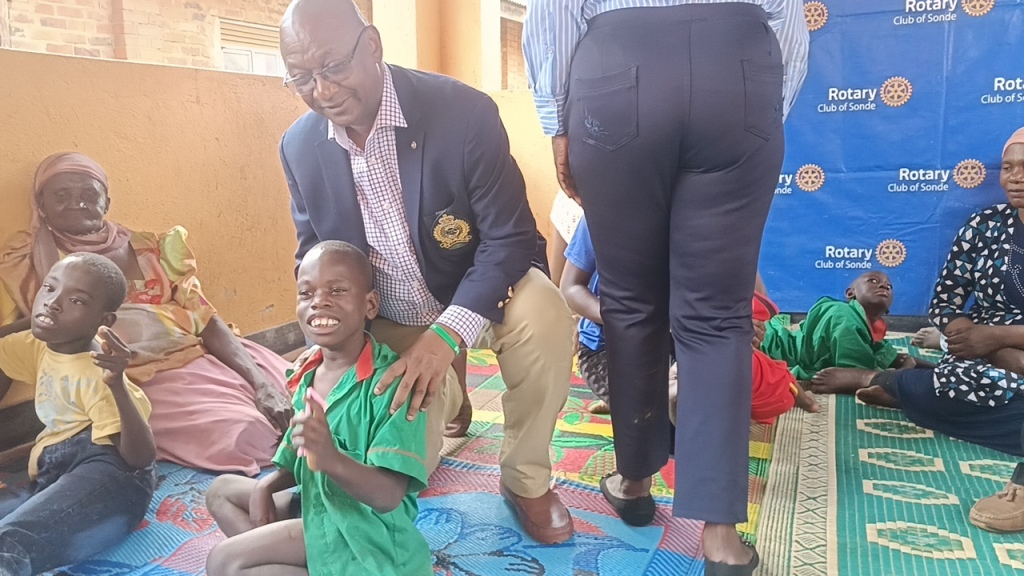
Recognizing the need, members of the Rotary Club of Sonde stepped in to help. The club completed one of the school buildings dedicated to the children and established exercise areas to support therapy and rehabilitation. Later, Rotary members constructed a special resting and play area where children with disabilities could interact and play alongside their peers without disabilities—a significant step toward promoting social inclusion and reducing stigma.
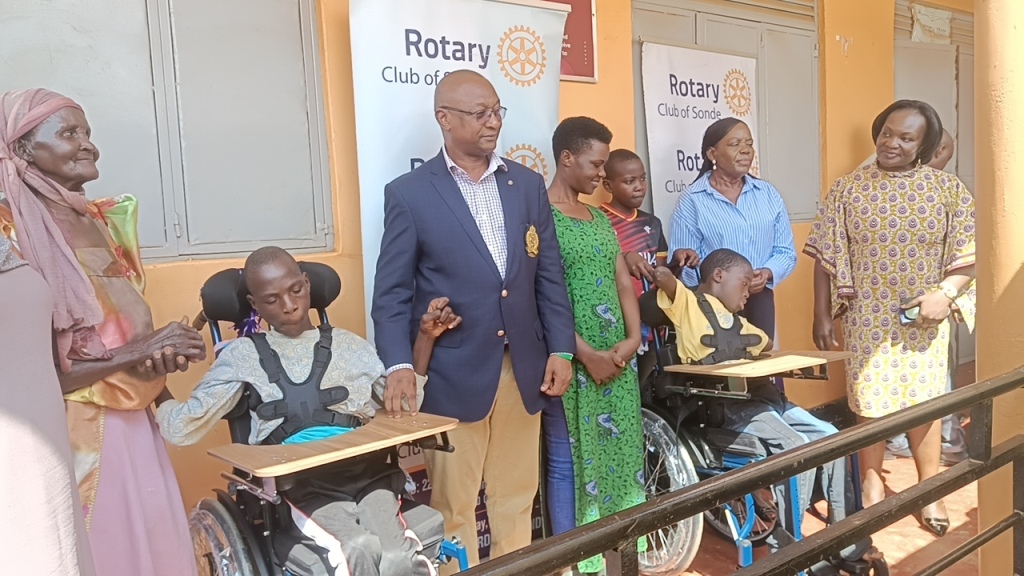
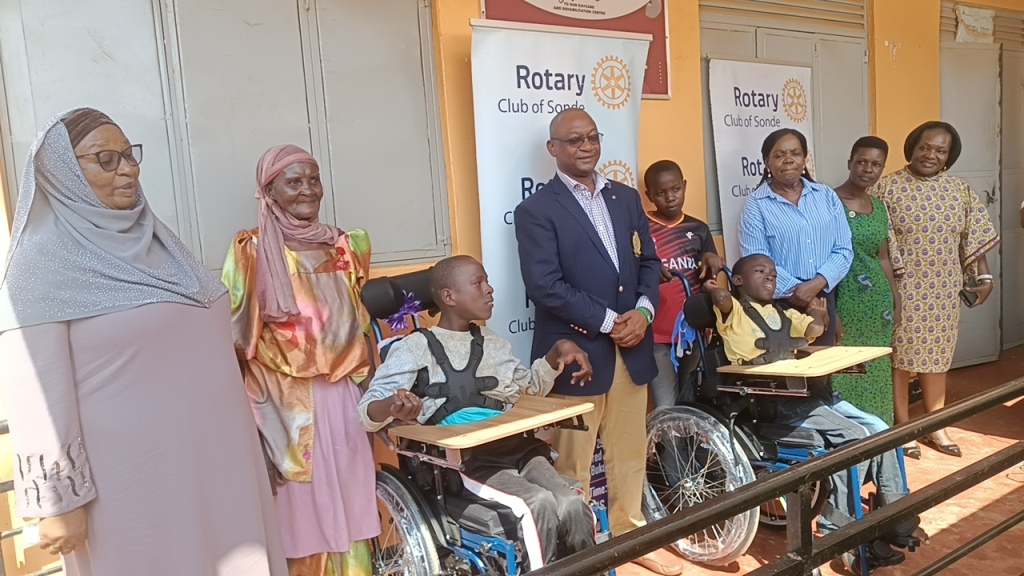
The latest milestone was marked by smiles and excitement as 14 new wheelchairs were donated to children with physical disabilities. The wheelchairs were handed over at St. Charles Lwanga Bukerere Primary School by Rotary District Governor D9213 Geoffrey Martin Kitakule in partnership with the Ministry of Health and Mulago Hospital’s Orthopaedic Department.
Hajjati Saidat Kayinja Adyeri, who spearheaded the initiative on behalf of the Rotary Club of Sonde, explained the process behind the donation.
“Experts first assessed the children and identified 14 who urgently needed wheelchairs to improve their mobility,” she said. “The assessment findings were forwarded to the Ministry, which responded positively and provided the support.”
Kirungi described the donation as life-changing for both the children and their caregivers.
“Parents had been struggling to carry their children everywhere—to play, attend therapy sessions, and carry out simple daily activities,” she said. “As the children grew bigger and heavier, it became increasingly difficult and exhausting. These wheelchairs are a game changer.”
Natifa Mafuko Buzaki, a member of the district council representing parents of children with disabilities, expressed gratitude for both the wheelchairs and the newly constructed resting area. She also used the occasion to urge families to embrace and support their children with disabilities.
“Parents who hide their children with disabilities are making a big mistake,” she said. “These children have a bright future if they are given the opportunity and support they deserve.”
District Governor Geoffrey Martin Kitakule echoed her sentiments while commissioning the new facility and handing over the wheelchairs.
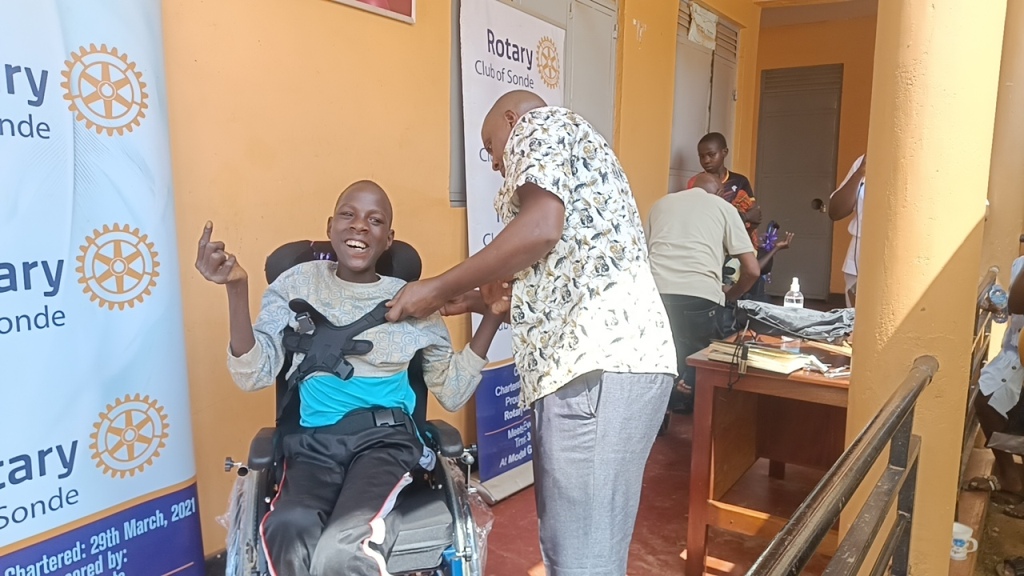
“These children need every opportunity to learn and develop, including learning to walk where possible,” he said. “The wheelchairs we have provided are of high quality and will greatly enhance their independence.”
He called on more individuals and organizations to support children with disabilities and strongly condemned the practice of hiding them from society.
Christine Alupo, President of the Rotary Club of Sonde, reflected on the club’s continuing commitment to the project.
“We started this programme last year with a vision to make a meaningful difference,” she said. “While we are proud of the progress made through the completed building, exercise spaces, and the new resting area, we recognize that the facility is still too small for the growing number of children. Our work continues.”
Parents attending the event shared emotional testimonies about the challenges they face daily, ranging from physical strain and financial hardship to social stigma. Many encouraged other parents not to hide their children but instead seek support from organizations and community networks.
The transformation at St. Charles Lwanga Bukerere Primary School stands as a powerful example of what can be achieved through compassionate leadership, community collaboration, and institutional support.
From a single dedicated space in 2024 to a growing network providing care, mobility aids, and opportunities for inclusion in 2025, the Umbrella Cerebral Pulse Network Association is changing lives while challenging long-held perceptions about disability.
As more children gain access to wheelchairs, proper facilities, and opportunities to interact with their peers, their smiles tell a story of dignity, hope, and brighter futures.
