
By Elijah Khisa
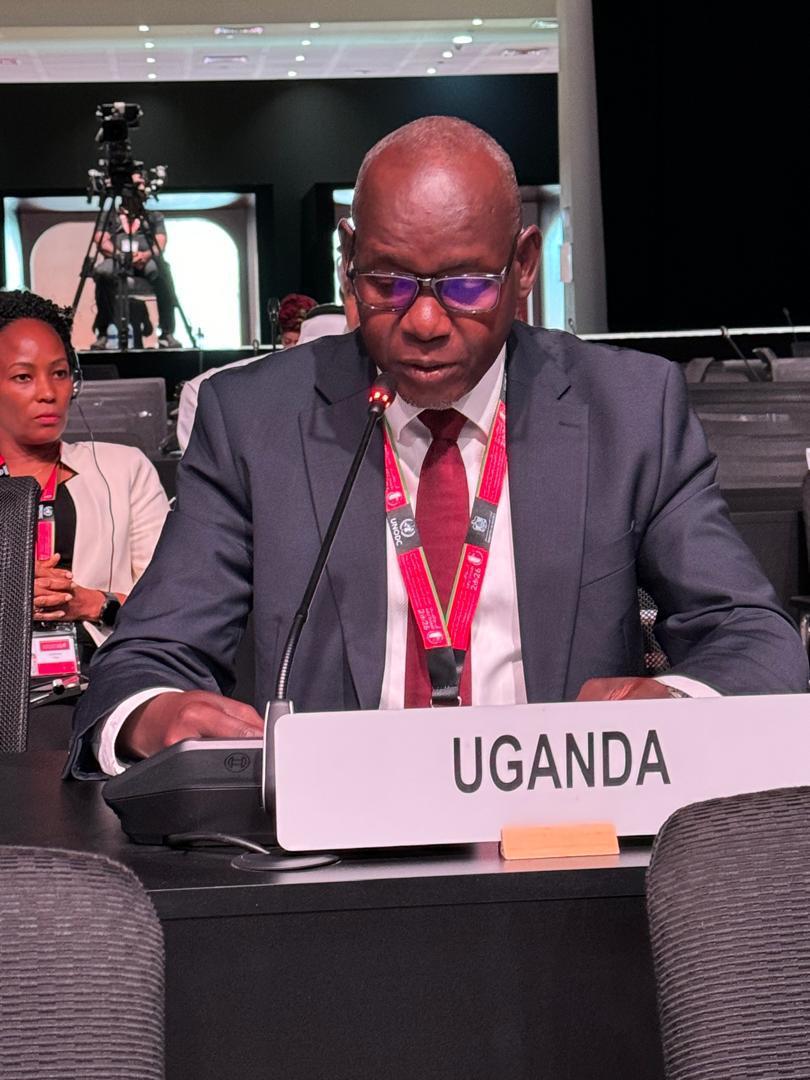
Uganda is participating in the ongoing UN Congress on Crime Prevention in Abu Dhabi, United Arab Emirates, where delegates are discussing mechanisms and strategies for tackling crime on a global scale.

Uganda’s Director of Public Prosecutions (DPP), Lino Anguzu, delivered a statement outlining the country’s crime prevention strategy, highlighting the growing use of digital technologies, artificial intelligence, encrypted communications, virtual assets and cross-border financial systems by criminal and terrorist networks.
Anguzu made the remarks on September 29, 2026, while delivering Uganda’s statement on addressing and countering crime, including organised crime and terrorism, at the UN Congress on Crime Prevention in Abu Dhabi.
He told delegates that Uganda’s criminal justice institutions have demonstrated resilience since 2020 in responding to terrorism, organised crime and transnational crime.
According to Uganda Police crime reports, reported criminal cases increased from 195,931 in 2020 to 231,653 in 2022 before declining to 196,405 in 2025, Anguzu said.
He, however, noted that emerging and evolving forms of crime continue to pose significant challenges to the country’s criminal justice system.

The United Nations Office on Drugs and Crime (UNODC) Strategic Analysis of Organised Crime in Uganda highlights the complex and interconnected nature of organised criminal activity, including links to transnational trafficking, illicit financial flows and cyber-enabled crime.
Anguzu said Uganda recorded 412 cybercrime cases, 18 money-laundering cases and one terrorism-financing case in 2025, involving billions of Uganda shillings.
In response to these challenges, Uganda has strengthened specialised structures within its criminal justice institutions, intensified intelligence-led investigations, expanded prosecution-guided investigations and enhanced international cooperation and asset recovery mechanisms.
He added that plea-bargaining initiatives have contributed to reducing case backlogs, while an Inter-Agency Committee on International Cooperation has been established to strengthen coordination in international legal cooperation.
Uganda reaffirmed its commitment to working with Member States and other partners to build specialised, adequately resourced and well-coordinated criminal justice institutions capable of effectively responding to new, emerging and evolving criminal threats.
