
By Jumah Kakomo.
Uganda Women’s Network (UWONET) wants government to introduce Universal Pre-primary education or early childhood education to eliminate child school dropouts and improve the quality of education.
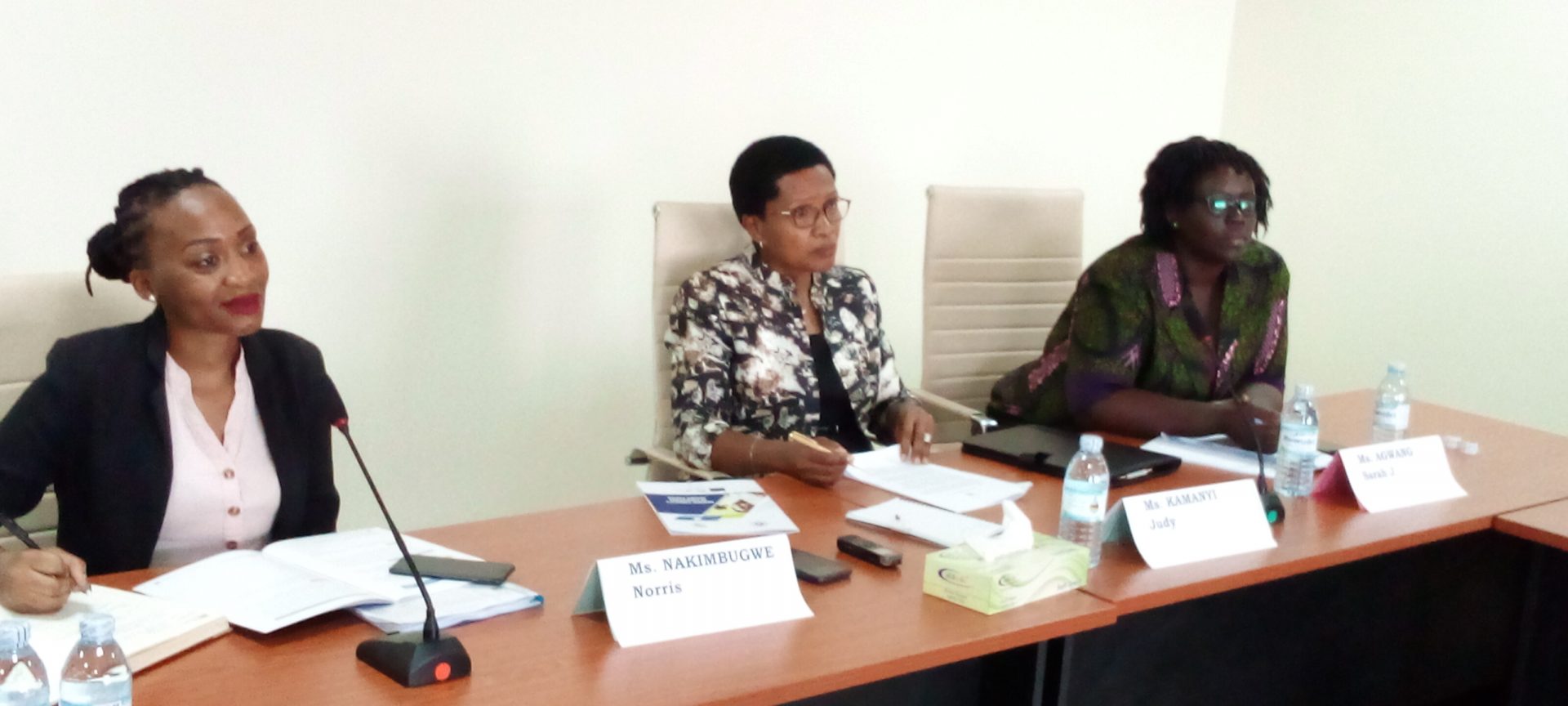
The call was made on Friday by UWONET team led by Judy Kamanyi, a consultant during the submission of UWONET recommendations in regards to formulate new Uganda’s Education and Sports Policy to replace the one of 1992 at the education policy review commission (EPRC) offices Nakawa Kampala.
Early childhood education or pre-primary education is defined by the Uganda Early Childhood Education as educational settings for children aged 3 through 5 years in preparing their entry into primary school.
Judy Kamanyi says children who are enrolled in an Early Childhood Education programme achieve more success at school. And as adults they have better career opportunities, improved health, and lower levels of dependence and criminal rates than those who do not attend an early education program.
“Early Childhood Education programme is mainly absorbed by private schools leading to unnecessary child dropouts due to inability of parents paying school fees”. She added.

The minister of Education and Sports mandated the Education Policy Review Commission (EPRC) to review the 1992 Education Policy with a view to repositioning Uganda’s Education system to meet the needs and challenges of the 21st century as specified in vision 2040.
UWONET also wants the government to introduce affirmative action in private universities. Affirmative action is defined as a set of procedures designed to; eliminate unlawful discrimination among applicants, remedy the results of such prior discrimination, and prevent such discrimination in the future. Applicants may be seeking admission to an educational program or looking for professional employment.
In 1990, the government of Uganda introduced Affirmative Action policy in the governance of higher education. From 1991, qualified women were entitled to bonus points of 1.5 for college admission; the purpose of which was to increase the participation of women in higher education.
UWONET also wants the government to introduce vocational education at primary level.
Sarah Agwang, head of programmes UWONET says “Vocational education and training, allows students to gain practical experience in their chosen career path before they even graduate.” She added that Students who finish those rigorous programs, have the credentials and training they need to get started right away in their chosen career path.
Norris Nakimbugwe, the public relations officer of UWONET said that Vocational education is a different learning option from the path of college or universities. She says it offers a path that imparts the skills and knowledge needed to work in a given occupation. It is coordinated with the requirements of the labor market and is an integral part of the education system.
The recommendations were made following the consultation of UWONET to stakeholders regarding the formulation of Uganda’s Education and Sports Policy to replace the one of 1992.
The EducationpolicyReviewCommission, which commenced work on 7th May, 2021, is investigating and inquiring into issues of policy, planning, funding, access, implementation, management, quality, institutional and staff capacity and legislation across all the education and sports sub sectors and will generate proposals on how challenges affecting the education sector can be addressed
Dr. Joseph Muvawala the deputy chairman EPRC assured UWONET that they are going to work hand in hand to see that all their recommendations are considered for quality and competitive education systems in Uganda.
