
By Kabuye Ronald
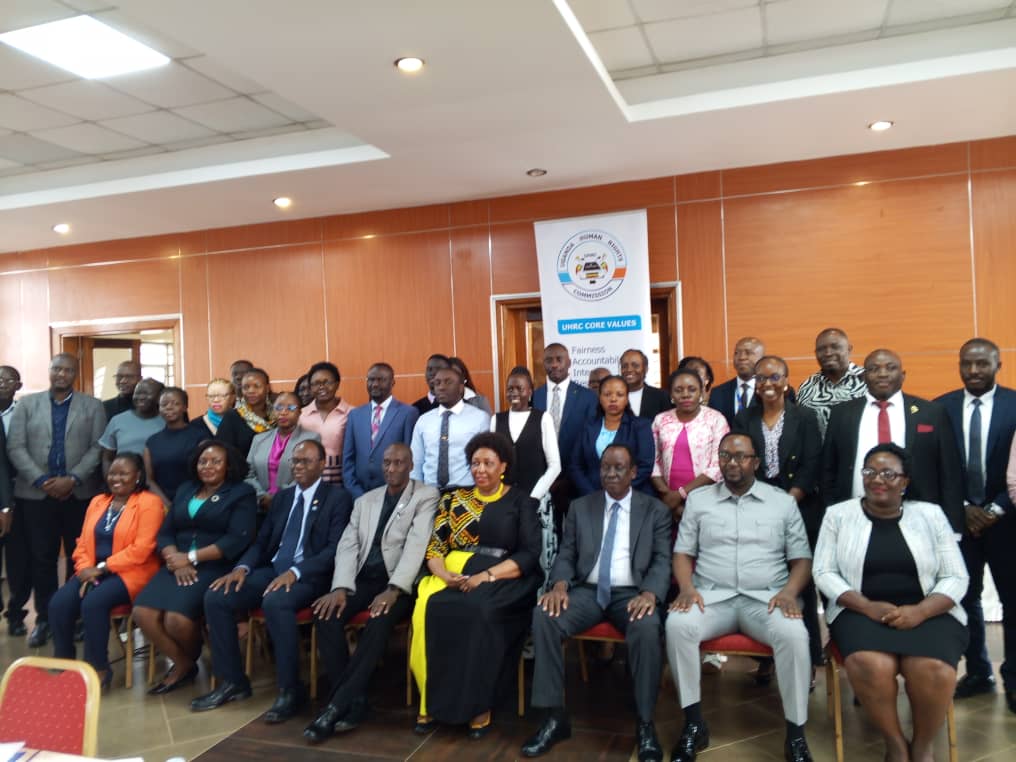
As Uganda prepares to present its progress report on the implementation of the 2022 Universal Periodic Review (UPR) recommendations, the Uganda Human Rights Commission (UHRC) has convened a national stakeholder meeting to assess the country’s achievements and challenges in fulfilling its human rights commitments.

Held on Monday at Esella Hotel in Kira Municipality, the conference brought together representatives from civil society organizations (CSOs), government ministries and agencies, the judiciary, Uganda Law Society, and academia. The forum served as a platform to share best practices and strategies for producing comprehensive and evidence-based reports ahead of Uganda’s next UPR reporting cycle.
“This national conference is a pivotal platform because it allows us to ask the hard questions, to listen to each other, and to promote collaboration,” said UHRC Chairperson Mariam Wangadya while officiating the opening of the one-day event. “The reports we produce must be honest, highlighting improvements made. Let’s talk results lives improved, systems strengthened. Let’s debunk the lies by telling stories of the positive changes that have happened in our domain.”

Wangadya emphasized Uganda’s continued commitment to the UPR process, noting that the country has undergone three UPR cycles: in 2011, 2016, and 2022. “In 2016, Uganda received 226 recommendations, accepted 148, and noted 78. In 2022, Uganda received 273 recommendations, accepted 139, and noted 134 registering an acceptance rate of 51 percent,” she said.
She acknowledged that while some may view the acceptance rate as low, it’s important to consider the depth of each commitment. “Behind every recommendation accepted lies a policy, and behind every policy is the potential to transform a life,” she added.
On resource allocation, Wangadya highlighted funding challenges. “The Commission’s budget has seen a moderate increase in the past financial year, but moderate is not enough. We need more resources, especially as we head into the electoral period.”
