
By Robert Segawa
The debate over Uganda’s Digital Number Plate Project has increasingly centered
on one figure: Shs714,300, the price paid for a new digital registration plate package.
But Shs714,300 is not the contractor’s profit. Cost calculations contained in the report presented
to Parliament put the direct cost of delivering one kit at approximately Shs630,000, leaving a
difference of only about Shs80,000.

According to the same calculation, the onboard tracking device costs about Shs350,000, two
BLE beacons about Shs130,000, while the number plates themselves cost approximately
Shs74,000. Labour, equipment, materials, premises, taxes and other operating expenses push the
total cost higher. In other words, the physical plates account for only about 12 percent of the
estimated cost of the complete kit.
Price stayed; costs moved
The price of a new kit has remained unchanged while exchange rates, international transport,
imported components and other operating costs have moved.
The difference between cost and price, therefore, cannot automatically be treated as profit. The
investor must also recover investment in production, technology and infrastructure.

The real question for Parliament is not simply why motorists pay Shs714,300, but how much the
investor actually earns after all costs are paid.
More than Shs40 billion paid in taxes
The project has paid more than Shs48 billion in taxes in Uganda since 2023 and ranks
among the country’s top taxpayers. More than 300 Ugandans are directly employed in local
production, with hundreds of additional jobs supported through related operations.
The contribution goes beyond taxes and salaries. Ugandans are being trained to manufacture,
install and operate the technology, building technical expertise that remains in the country.
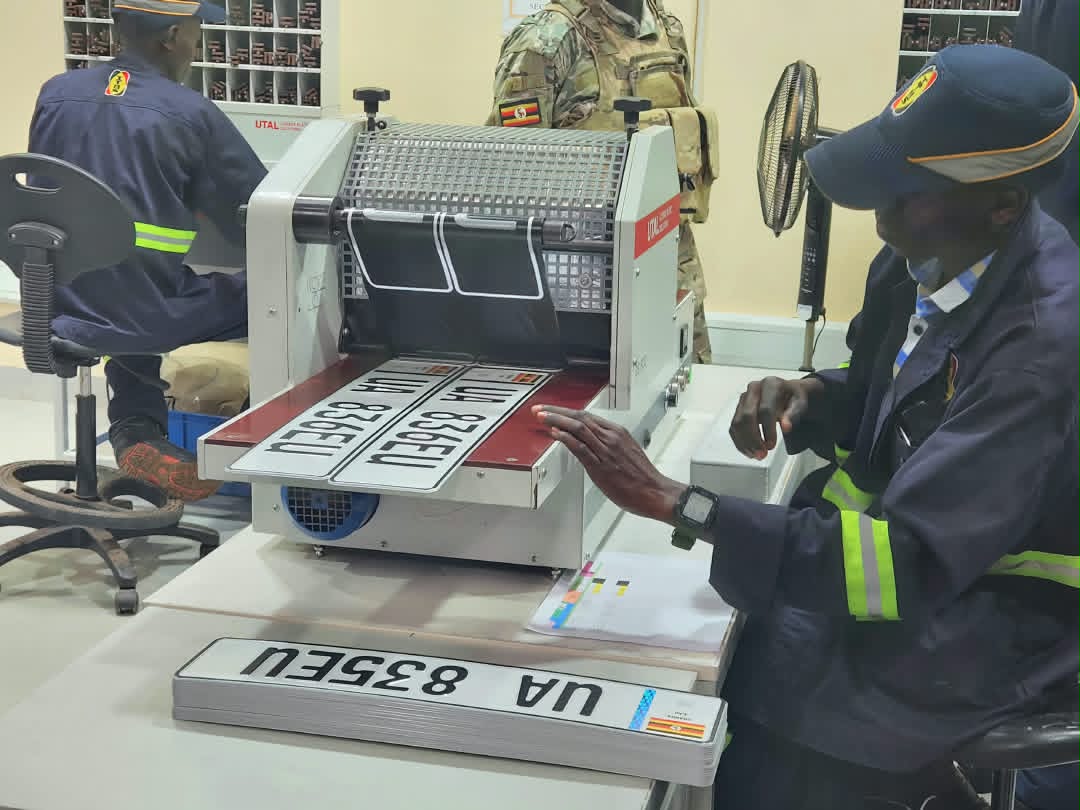
Number plates are now produced locally rather than simply imported as finished products.
Uganda is gaining jobs, taxes, production capacity and technological know-how.
The value of local production may extend beyond Uganda’s domestic market. By training
Ugandan engineers and technicians to manufacture, install and operate the system, the project is
creating expertise that could eventually be exported across East Africa. Uganda could move
from importing technology to becoming a regional source of production, technical expertise
and skilled teams capable of supporting similar projects in neighbouring markets such as Kenya
and Tanzania.

MPs have also seen the technology themselves. Members of Parliament visited the Police
Command Centre at Naguru and tested the system using vehicles selected during the
inspection, confirming that vehicles could be identified and tracked.
Meanwhile, the Ministry of Works and Transport has confirmed that production recovered
following earlier shortages and that the backlog was cleared. The production is here. The
technology is here. And MPs have seen it working themselves.
Would any businessman provide all this for free?
This leaves Parliament with a basic commercial question: If you were an investor, would you
build production facilities, import equipment, employ and train hundreds of Ugandans, pay more
than Shs40 billion in taxes, operate the technology and carry the investment risk for free?
Of course not. A private investor is expected to make a return. The legitimate question is whether
that return is reasonable and whether Uganda receives sufficient value in exchange. That requires
examining actual costs and profits, not assuming that the entire Shs714,300 goes into the
investor’s pocket.
Could Uganda dismantle something it should be building on?
Parliament has every right to investigate whether Ugandans are receiving value for money, but
value for money requires doing the full calculation. Uganda would still need plates, tracking
technology, software, production facilities, fitment centers, maintenance and technical personnel
if the existing project disappeared.
That makes the question facing Parliament considerably bigger than the price of a number plate.
Could Uganda end up dismantling a project that is paying taxes, employing and training
Ugandans, building local technological capacity and providing Police with a system MPs have
personally seen working?
If the answer is yes, Parliament should first calculate what replacing all of that would cost.
Because Shs714,300 is not profit. It is a price. And a functioning national technology
infrastructure cannot be valued by looking at the price of the piece of metal.
