
By Yusuf Obbo
The Government of Uganda has officially recognised sickle cell disease as a major non-communicable disease (NCD), marking a significant policy shift that will pave the way for a dedicated government budget to strengthen prevention, treatment and long-term care.

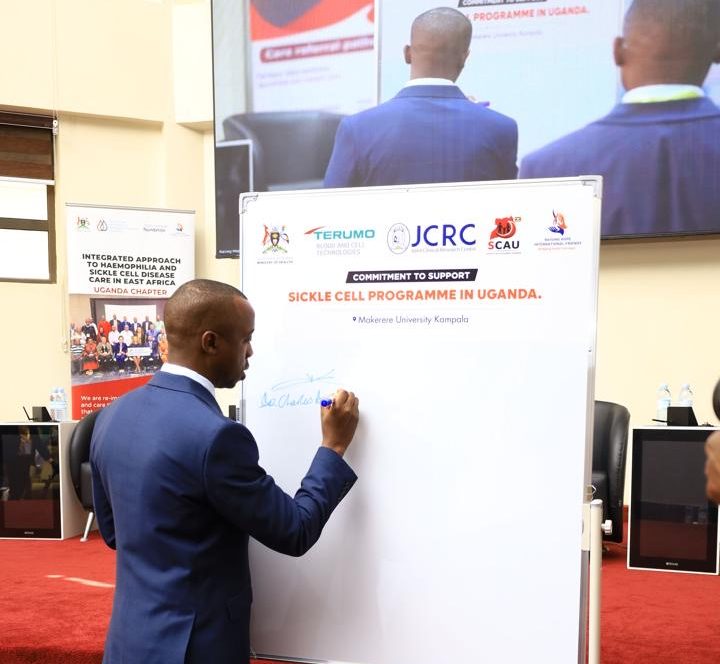
The announcement was made by the State Minister for Health, Hon. Francis Ayume, during the 5th Annual Sickle Cell Convention held at the Makerere University School of Public Health. The convention was organised by Raising Hope International Friends in collaboration with the Ministry of Health.
Speaking at the event, Ayume revealed that Parliament had already recognised sickle cell disease as a major NCD, and that the Ministry of Health has begun the process of amending the Public Health Act to explicitly include sickle cell disease in Uganda’s legal framework.
“The amendment will also provide for a dedicated budget line to support sickle cell programmes and improve access to quality healthcare services for patients across the country,” Ayume said.
He commended development partners, civil society organisations and other stakeholders for complementing government efforts in the prevention, diagnosis and treatment of sickle cell disease.
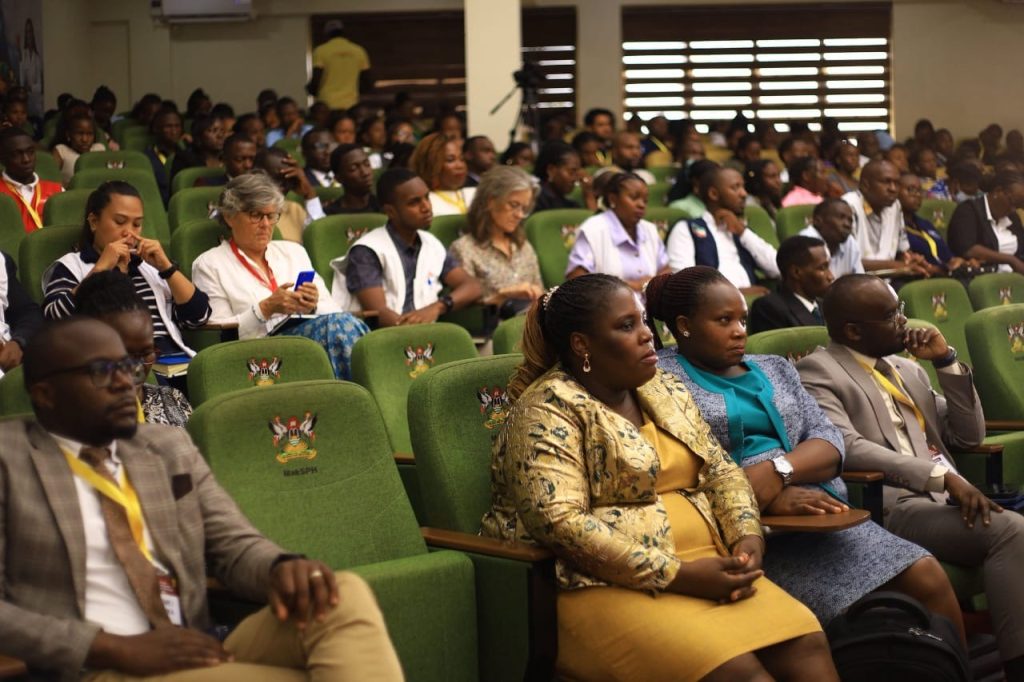
The convention, held under the theme “Building Sustainable Sickle Cell Support Systems in Uganda and Beyond Through a Multi-Sectoral Approach,” attracted more than 420 participants, including health professionals, researchers, policymakers and development partners, while 46 delegates joined virtually from different countries.
The Director General of Health Services at the Ministry of Health, Prof. Dr. Charles Olaro, urged stakeholders to adopt the same coordinated systems, discipline and community mobilisation that enabled Uganda to successfully combat the HIV epidemic.
He proposed the establishment of a national sickle cell care cascade modelled on the HIV “95-95-95” framework to improve diagnosis, linkage to care and long-term treatment retention.
“This approach will enable Uganda to systematically track patients from diagnosis through treatment while ensuring continuity of care,” Olaro said.
The Executive Director of Raising Hope International Friends and President of the Sickle Cell Alliance Uganda, Isaac Okello, described Parliament’s recognition of sickle cell disease as a historic breakthrough after decades of limited national attention.

“For many years, sickle cell has been treated as a private family burden—managed quietly at home, discussed in hospital corridors, but rarely debated in Parliament,” Okello said.
He noted that Parliament’s decision, coupled with the gazettement of June 19 as the National Sickle Cell Commemoration Day, represents more than a symbolic gesture.
“It signifies sustained government commitment, formal accountability and a transition from donor-dependent, project-based interventions to nationally financed programmes,” he added.
Okello also highlighted his organisation’s recent interventions, including the donation of a sickle cell testing machine worth more than Shs10 million to Iganga General Hospital and the screening of over 14,000 people during the National Sickle Cell Commemoration activities held in Jinja last month.
He called upon government, private sector partners, cultural institutions and development agencies to strengthen collaboration in the fight against the disease.
During the convention, stakeholders adopted several key resolutions aimed at improving sickle cell care nationwide. These include finalising and financing a costed National Sickle Cell Strategic Plan, expanding newborn screening coverage to 80 percent by 2028, establishing a National Sickle Cell Registry for surveillance, research and planning, increasing domestic government funding, promoting genotype testing through cultural and faith-based institutions, and integrating mental health, adolescent health and reproductive health services into routine sickle cell care.
The convention brought together senior government officials, clinicians, researchers, cultural leaders, civil society organisations, pharmaceutical manufacturers, blood and cell technology companies, and families affected by sickle cell disease, all united in advancing Uganda’s response to one of the country’s most significant inherited health conditions.
