
By Jumah Kakomo
The Harambe Initiative Uganda is advocating for the reduction of the size of the Parliament of Uganda saying the current number of over 500 Members of Parliament (MPs) is considered too large and unnecessary, leading to inefficiencies and a significant financial burden on the country.

The Harambe Initiative Uganda is a non-partisan and non-profit organization that aims to promote good governance, accountability, and transparency in Uganda. The organization is led by Nasser Kakumba, a Ugandan advocate and reformist.
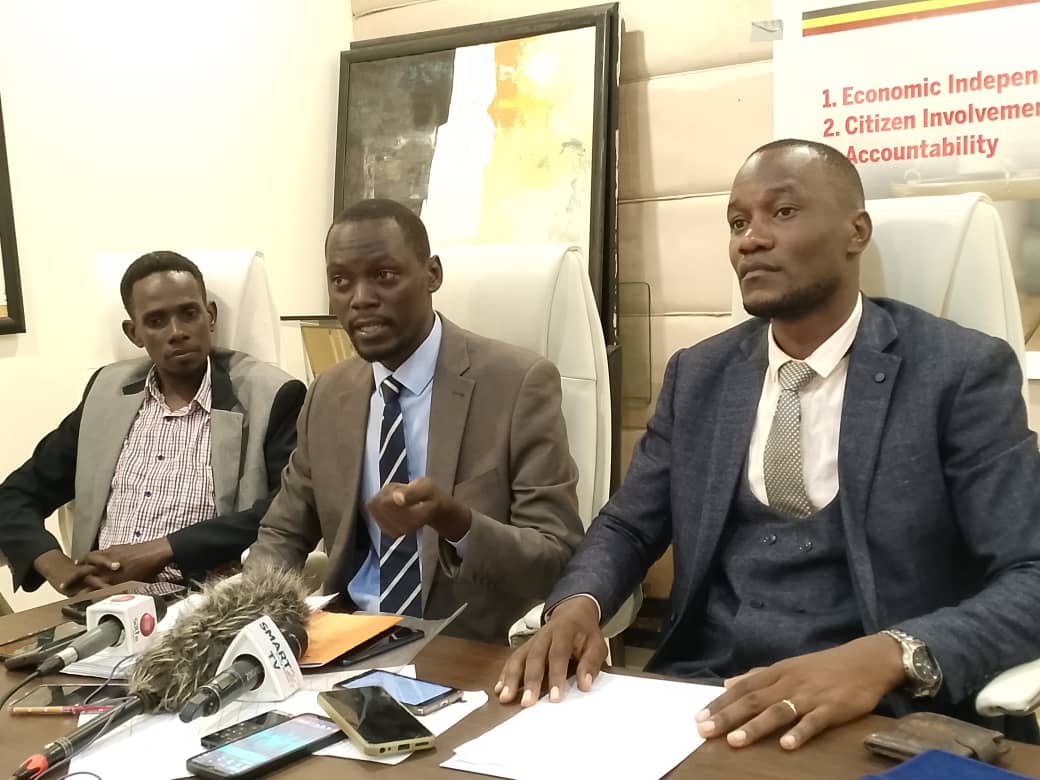
Addressing the media on Thursday Kakumba, argued that the large size of the parliament is a huge burden on taxpayers, who have to pay for legislators’ allowances and other benefits. He suggests that this money could be better spent on essential public services like healthcare and education.
“We have too many MPs,” Kakumba said. “It’s unsustainable and unnecessary. We need to streamline our parliament to make it more efficient and effective.”

Kakumba argued that with over 500 members, Uganda’s parliament is one of the largest in Africa. “This is a huge burden on taxpayers,” he said. “We are spending billions of shillings on salaries, allowances, and other benefits for MPs. This money could be better spent on essential public services like healthcare and education.”
Kakumba also pointed out that the large size of parliament has led to inefficiencies and a lack of accountability. “With so many MPs, it’s difficult to hold them accountable for their actions,” he said. “We need a smaller, more focused parliament that can effectively represent the interests of Ugandans.”
The Harambe Initiative Uganda has been championing various political reforms aimed at promoting good governance and accountability. Reducing the size of parliament is one of their key demands.
“We believe that a smaller parliament will lead to better representation, reduced costs, and improved accountability,” Kakumba said. “We urge the government to consider our proposal and take steps to reduce the size of parliament.”
Hassan Kalule, a legal expert and member of the Harambe Initiative Uganda, has been at the forefront of advocating for constitutional reforms in Uganda who recently has been focusing on the legal framework that allows for the reduction of the size of Uganda’s parliament.

Kalule argues that reducing the size of parliament would lead to significant cost savings for the country. “With fewer MPs, we would spend less on salaries, allowances, and other benefits,” he said. “This money could be better utilized in critical sectors and infrastructure development.”
Kalule also emphasized that a smaller parliament would improve efficiency and accountability. “With fewer MPs, each member would have a greater sense of responsibility and accountability to their constituents,” he said. “This would lead to better representation and more effective governance.”
“We are not advocating for a drastic reduction,” Kalule clarified. “We propose a gradual reduction to a more manageable number, such as 180-191 MPs. This would still allow for effective representation while promoting efficiency and accountability.”
According to Kalule, Tanzania is 3.9 times bigger than Uganda in geographical area. It has a population of approximately 66 million people, a GDP of 76 billion USD and per capita income of 1,200 USD as of 2022 yet it has 393 legislators.
South Africa is five times bigger than Uganda in geographical size. It has a GDP of 405 billion USD, a population of approximately 61 million people and per capita income of 6,700 USD as of 2022 yet it has 400 legislators.
India is 13.6 times bigger than Uganda; it has a population of approximately 1.4 billion people, a GDP of 3.5 trillion USD and per capita income of approximately 2,410 USD yet it has a total of 543 representatives, among other countries.
Kakumba says the army, youth, disabled, workers and elderly not represented in parliament because this category has functional ministries or authorities where their voices can best be heard.
According to Hassan Kalule, through a referendum, there is a need to reduce the size of the parliament because MPs cannot reduce themselves adding that the constitution supports this move under article 255 whose amendment is in section 11 of the referendum and other provisions.
Now the duos say they have commenced seeking for signatures across the country to support them getting their mission done and this campaign will run between 40-60 days.
