

By Jumah Kakomo
Uganda People’s Congress (UPC) President Jimmy James Akena has expressed concern over the continued prevalence of child malnutrition in Uganda, warning that inadequate nutrition among children threatens the country’s future development.
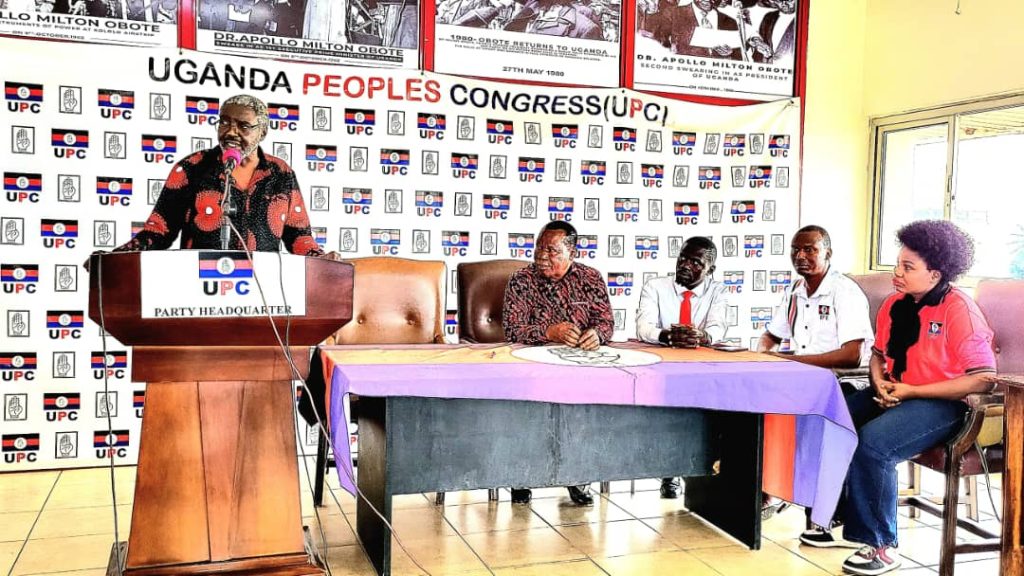
Speaking during the party’s weekly press briefing at the UPC headquarters in Kampala on Wednesday, Akena called for urgent action to improve family welfare and strengthen access to essential public services. He said many young children continue to suffer from hunger and inadequate nutrition, despite ongoing efforts to improve health outcomes.

Akena argued that meaningful national development cannot be achieved if children lack access to adequate food and quality health care. He emphasized that building a healthy and productive population begins with supporting families and improving systems that ensure food security, health care, and child protection. According to him, safeguarding children’s well-being is a national responsibility that should transcend political interests.
Highlighting the scale of the problem, Akena said child malnutrition continues to pose a serious threat to Uganda’s future. He noted that more than one-third of Uganda’s young children approximately 2.4 million are stunted, a condition that permanently affects physical growth and cognitive development. He also pointed out that nearly half of children under the age of five and about one-quarter of women of childbearing age are affected by anemia. Although stunting and anemia rates have declined in recent years, he said the burden remains unacceptably high.
Akena attributed the persistence of malnutrition to several underlying factors affecting households across all income levels. These include early pregnancies, low birth-weight babies, repeated childhood illnesses such as diarrhoea, inadequate breastfeeding practices, limited dietary diversity, poverty, and insufficient knowledge about proper child nutrition.
Citing national estimates, Akena said that between 2013 and 2015 more than 500,000 young Ugandan children died, with nearly half of those deaths associated with undernutrition. He noted that undernutrition contributes to four out of every ten deaths among children under five years of age.
He further referred to findings from the 2012 Cost of Hunger in Uganda study, which estimated that illnesses linked to child undernutrition among children under five cost the country more than UGX 525 billion in health care expenditure. The study also estimated that undernutrition costs Uganda approximately UGX 1.8 trillion annually equivalent to about 5.6 percent of the country’s Gross Domestic Product (GDP) through increased health care costs, reduced educational attainment, lower labour productivity, and other economic losses.
According to Akena, the combined impact of poor health, repeated school grades, and reduced productivity perpetuates a cycle of poverty that affects both families and the national economy.
He called on both local and national authorities to prioritize child nutrition in government planning and allocate adequate funding for nutrition programmes in community budgets. Akena also pledged that the UPC would continue advocating policies aimed at improving household incomes, strengthening food security, and protecting the welfare of families across Uganda.
