
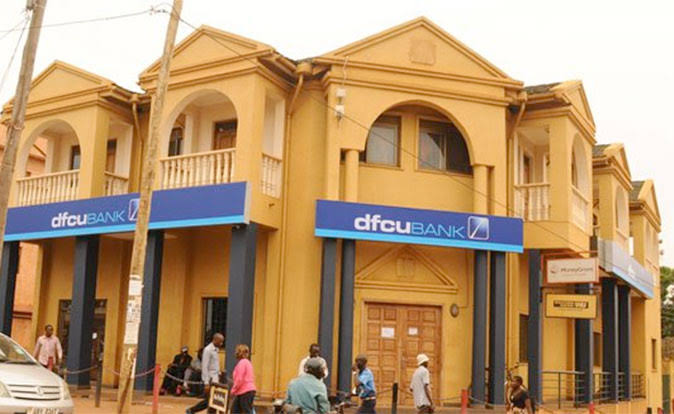
By Musisi Lwanga
Nearly a decade after dfcu Bank acquired selected assets and liabilities of the defunct Crane Bank, the unresolved legal dispute surrounding the transaction has emerged as a major financial burden for the lender.
dfcu says escalating legal costs linked to the case before the Commercial Court in London have significantly affected its financial performance, pushing the bank into a projected loss for the first half of 2026 despite continued growth in deposits, lending and total assets.

In a trading update released on Tuesday, dfcu projected a net loss of Shs15.8 billion for the six months ended June 30, 2026, compared with a profit of Shs34.5 billion recorded in the same period last year.
The bank expects to post a pre-tax loss of Shs26.3 billion, a sharp reversal from the Shs39.7 billion pre-tax profit reported in the first half of 2025.
The results highlight the extent to which the long-running Crane Bank dispute has moved beyond a legal contest to become a significant cost to one of Uganda’s largest commercial banks.
Core business remains resilient
Despite the projected loss, dfcu’s underlying banking operations continued to grow during the period.
Customer deposits increased by Shs410 billion to Shs2.87 trillion, while the bank’s gross loan portfolio expanded to Shs1.44 trillion.
Total assets also increased to Shs3.94 trillion, pointing to continued growth in the bank’s balance sheet and customer business.
Operating income rose by eight per cent to Shs215.6 billion, suggesting that the bank’s core operations remained resilient despite the exceptional costs associated with the litigation.
However, the improvement in income was more than offset by a steep rise in expenses.
Operating costs increased by 53 per cent to Shs230 billion, with dfcu attributing much of the increase to legal fees arising from its defence of the Crane Bank case in the United Kingdom.

A dispute dating back to 2016
The dispute traces its roots to the collapse of Crane Bank in 2016, when the Bank of Uganda placed the lender under statutory management.
In January 2017, selected assets and liabilities of Crane Bank were transferred to dfcu as part of the resolution of the failed institution.
The transaction has since become one of Uganda’s most contentious banking and corporate disputes.
Sudhir Ruparelia, the former majority shareholder of Crane Bank, has repeatedly challenged the takeover, arguing that the bank was solvent when it was taken over and that the resolution process was unlawful.
Ruparelia contends that Crane Bank’s assets were transferred to dfcu at a significantly undervalued price without an independent valuation. He has described the transaction as a fraudulent takeover that deprived shareholders of the true value of the financial institution.
Those claims are now at the centre of proceedings before the English High Court, where Ruparelia and other Crane Bank stakeholders are seeking more than £170 million, equivalent to about Shs840 billion, in damages.
dfcu has rejected the allegations and maintains that the acquisition was carried out lawfully under Uganda’s banking laws and with the supervision of the Bank of Uganda.
The bank says the transaction followed findings by PricewaterhouseCoopers that Crane Bank had become significantly undercapitalised, making regulatory intervention necessary.
Legal bill continues to rise
The prolonged litigation has come at an increasingly heavy cost for dfcu.
The bank’s 2025 Annual Report shows that it spent Shs76.6 billion on legal expenses related to the Crane Bank dispute, up sharply from Shs42.3 billion in 2024.
With the London trial expected to begin within weeks, legal expenses are likely to remain elevated. Any appeals or further proceedings could prolong the financial pressure on the bank.
The case therefore presents dfcu with a difficult balancing act: its core banking business continues to expand, but the costs of defending the Crane Bank acquisition are eroding the gains generated by that growth.
Nearly 10 years after Crane Bank ceased operations, the dispute continues to cast a long shadow over Uganda’s financial sector.
Ruparelia maintains that the takeover was fundamentally flawed and deprived shareholders of the bank’s rightful value, while dfcu insists that it acted within the law and followed regulatory directives.
The London court will now determine the competing claims in a case that could have significant financial and legal consequences for both sides—and potentially bring a decisive chapter to one of Uganda’s most closely watched corporate disputes.
