
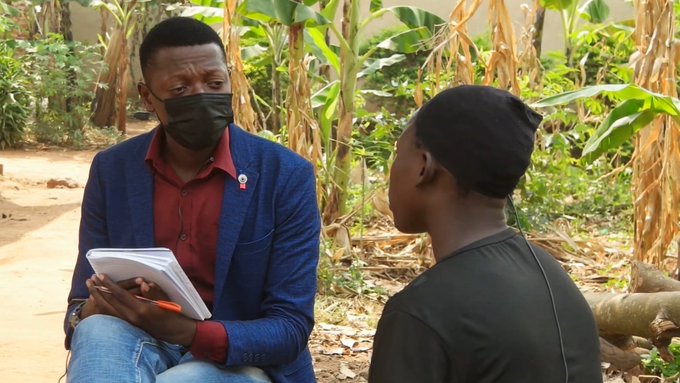
“I lost my young sister in my hands because we could not access blood. That pain changed the direction of my life.”

By Our report
There are moments in life that never leave you. For journalist Yusuf Obbo, one such moment came in 2015 at Iganga Main Hospital, where he experienced a painful loss that would later shape the direction of his life.
As he celebrates nine years in journalism, Obbo looks back at the experience that pushed him into a profession he now regards as a tool for serving ordinary Ugandans.
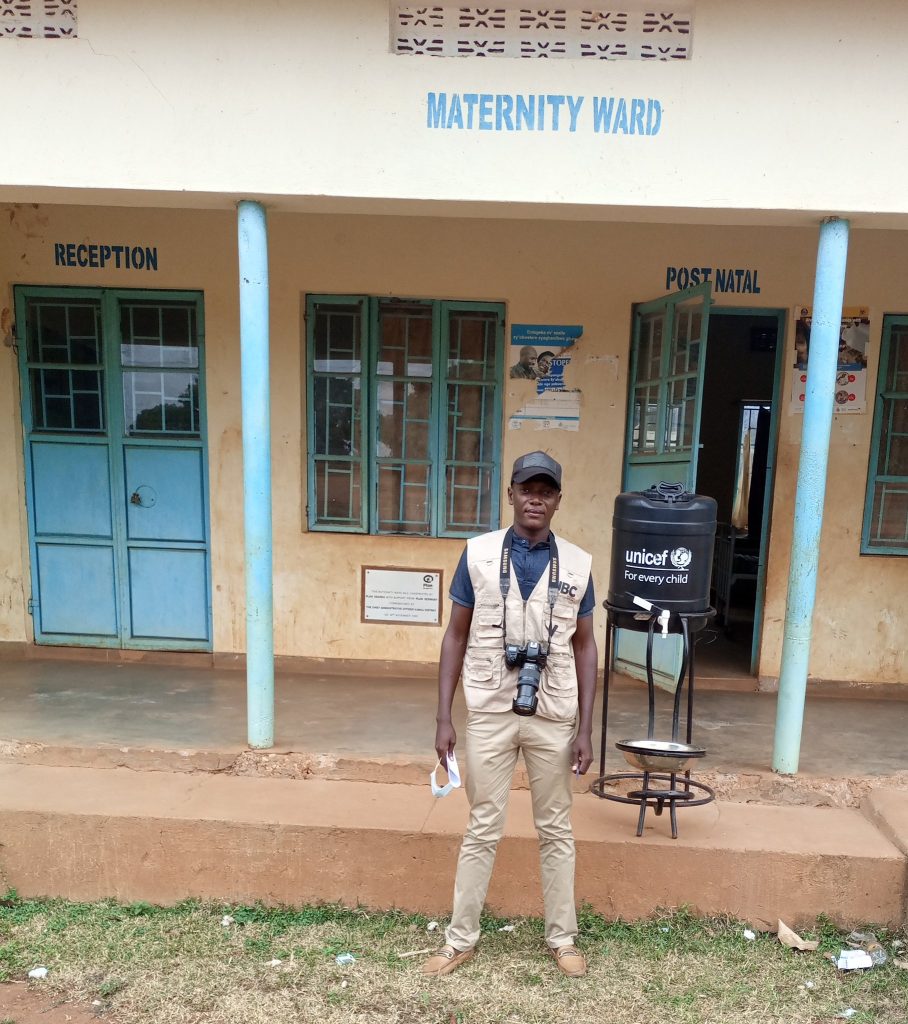
In 2015, while still a student, Obbo lost his young sister while in his hands at the hospital. The child needed blood, but according to Obbo, his efforts to get assistance were unsuccessful.
“I was in a school uniform, shouting, ‘Help, help,’ but no one came to my rescue,” he recalls.
The experience left him angry, frustrated and deeply hurt.
For a young person who believed that government health facilities were meant to serve everyone regardless of their financial status, the reality he encountered was devastating.
Obbo says he came to understand how difficult life can become for ordinary citizens who have no money, connections or influence.
“I realised that when you have nothing, everything becomes difficult to get, including services that you are supposed to receive for free,” he says.
From Pain to Purpose
That painful experience planted a seed that would later grow into a commitment to journalism.
In 2018, after carrying the anger and pain from what he had experienced at a government health facility in his home district of Iganga, Obbo began his journalism journey.
He says he chose journalism because he wanted to become a voice for people who often have no voice of their own.
His journalism has increasingly focused on stories affecting ordinary people — poor communities, patients struggling to access services, victims of injustice and taxpayers concerned about how public resources are used.
Throughout his journey, Obbo says he has also personally assisted people to access services in public institutions, including hospitals and places of justice such as police stations, courts and local council offices.
For him, these experiences have strengthened his belief that journalism should not only inform the public but should also contribute to positive change in society.
“Nothing makes me more at peace and happy than seeing poor people being served better,” says Obbo.

For Obbo, journalism is therefore more than reporting events.
It is about advocating, exposing problems, demanding accountability and connecting people to services they deserve.
“I chose journalism as my career because I wanted to serve the common people — those who need better services but have no money to bribe the system, no voice to demand their rights and no connections to help them access what they need,” he says.
Why Corruption Hurts the Poor Most
Obbo believes the fight against corruption is particularly important because ordinary citizens are often the biggest victims when public resources are misused.
He argues that when government money is stolen or public assets are abused, the consequences are felt directly by communities that depend on public services.
“A lot is lost to corruption,” he says. “Actually, it is the poor people who lose the most when government money is stolen.”
He points to health care as one of the areas where the cost of poor governance can be measured in human lives.
Many Ugandans continue to struggle to access timely and quality medical care, and Obbo believes corruption, poor service delivery and failure to properly manage public resources contribute to the suffering of citizens.
For him, reporting such challenges is not about attacking government institutions. It is about demanding that institutions serve the people for whom they were created.
The Struggle of Educated but Unemployed Youth
Obbo also raises concern about young Ugandans who acquire education and qualifications but struggle to find opportunities because they lack money or connections.
He argues that when employment opportunities are influenced by corruption, nepotism or the ability to pay, deserving young people are denied the opportunity to contribute to their country.
“There are many young and patriotic Ugandans who are educated, but because they have no money to buy jobs, they are denied a chance to serve,” he says.
He believes that those entrusted with public positions should remember that government employment is a responsibility to citizens, not an opportunity to enrich oneself.
Patriotism Beyond Words
For Obbo, patriotism means more than displaying national symbols or speaking about love for Uganda.
He defines patriotism as caring for the country, spreading love, working together and putting the interests of the nation first.
He is concerned that some public officials entrusted with serving Ugandans instead put personal interests ahead of the public good.
“Patriotism means caring about your country, spreading love, teamwork and putting your country first,” he says.
He argues that civil servants and public officials have a duty to protect public resources and ensure that services reach the people.
Nine Years, One Mission
Nine years after entering journalism, Obbo says the mission that began with the pain of losing his sister remains unchanged.
His work has become a platform through which he continues to raise questions about corruption, public service delivery, accountability and the rights of ordinary citizens.
The journey has not always been easy, but the experience of 2015 remains a constant reminder of why he chose the profession.
The young student who once stood at a hospital pleading for help has become a journalist determined to ensure that other ordinary Ugandans do not suffer in silence.
His journalism is therefore rooted in a simple belief:
The people who have the least power should not have the least access to justice and public services.
As he marks nine years in journalism, Obbo says his anti-corruption campaign represents the pain carried by many Ugandans who have experienced injustice, poor services and abuse of public resources.
He hopes that continued public awareness, responsible journalism and accountability will contribute to a better Uganda — one where taxpayers feel that their contributions matter and where the poor can access public services without having to know someone or pay someone.
“The fight against corruption represents the pain that Ugandans carry, mostly those who are victims,” he says.
And so, nine years on, the story that began with grief has become a mission of service.
A mission to speak for the voiceless.
A mission to expose what is wrong.
A mission to defend the ordinary citizen.
And above all, a mission to serve Uganda through journalism.
