
By Kabuye Ronald
The Spina Bifida and Hydrocephalus Association Uganda (SHAU), a disability rights organisation, has intensified efforts to empower children and young people living with Spina Bifida and Hydrocephalus (SBH) with the knowledge and skills needed to live independent and productive lives.
Many children living with SBH continue to face challenges related to incontinence, skin care and self-management, which often affect their overall well-being, education and participation in community activities.
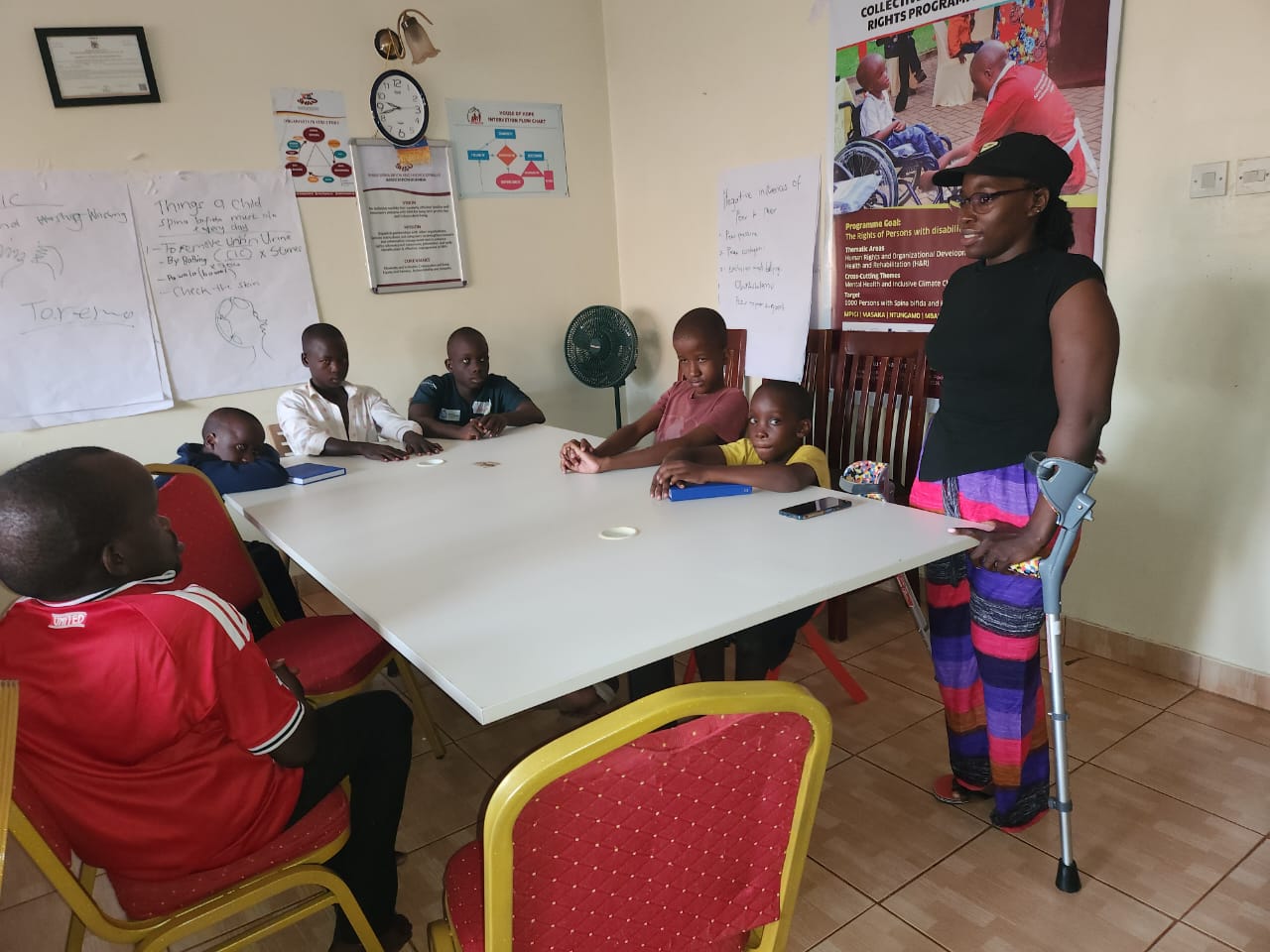
To address these challenges, SHAU has conducted a structured week-long in-house school holiday training programme dubbed Youth Independence Week. The programme was designed to provide targeted support to children and young people living with SBH, alongside their peers without the condition.
The training, which has concluded in the Central Region, is expected to be rolled out in Uganda’s remaining three regions.
Participants were equipped with practical knowledge in areas including self-catheterisation, bladder evaluation, medical adherence, self-awareness and peer-to-peer support. The intervention is intended to help young people develop self-management skills while addressing challenges that may affect their experience at school and within their communities.
SHAU Patient Liaison Officer, Ritah Nagujja, said the training is being implemented under the Buntu Bulamu Peer-to-Peer Project, which aims to empower children and youth living with SBH, together with their peers without disabilities, to lead productive and independent lives at home, school and in their communities.
According to Nagujja, the initiative also seeks to build self-esteem and resilience among young people living with SBH, helping them overcome stigma and discrimination.
She added that bringing together young people with disabilities and their peers without disabilities creates an opportunity for social interaction, mutual understanding and the development of strong support systems.

“We selected those living with SBH, with each participant coming along with his or her peer without SBH. Our major aim is to have them support each other,” Nagujja said.
She noted that the training is designed to ensure that both groups learn from one another and gain the confidence and skills needed to become more independent in caring for themselves.
One of the facilitators at the training, Catherine Nakanyiga, a 32-year-old mother and clinical psychologist living with Spina Bifida, shared her personal journey and encouraged young people with SBH not to allow stigma to limit their ambitions.
Nakanyiga challenged the misconception that people born with Spina Bifida and Hydrocephalus do not grow into adulthood or cannot become successful members of society.
She said stigma and discrimination were among the biggest challenges she faced while growing up.
“I went through different challenges, but the most outstanding was stigma. In primary school, they promoted me with my desk from Primary One to Primary Seven without changing it simply because they did not want other pupils to share a seat with me,” Nakanyiga said.
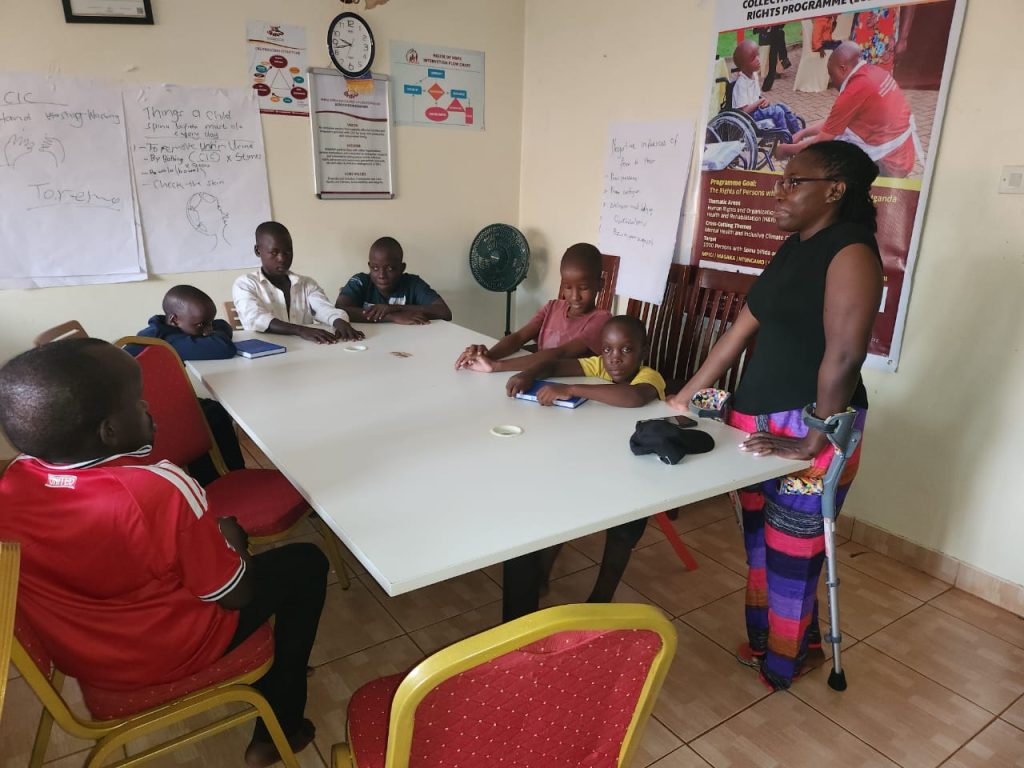
Catherine Nakanyiga during the youth training
She explained that such experiences can cause many children with disabilities to lose confidence and eventually drop out of school.
Nakanyiga, however, encouraged young people living with SBH to remain strong, focus on their future and challenge negative attitudes through education and awareness.
“These children with SBH do grow and become important people in our communities. I managed to overcome stigma because of the support from my family and my doctor, who encouraged me to focus on the future rather than my current situation. This enabled me to complete my education and become who I am today,” she said.
She encouraged people living with SBH to remain confident and not be discouraged by negative comments.
“You cannot change the attitude of everyone. Let them talk, but whenever you get an opportunity, talk to them and teach them about Spina Bifida and Hydrocephalus,” Nakanyiga added.
Nakanyiga also called upon parents and guardians to involve children living with SBH in household activities and avoid isolating, abusing or calling them derogatory names.
“Children are coming home for the holidays, and I appeal to parents to involve them in household chores. Do not isolate them or assume that they cannot do anything. Teach them and allow them to participate because they are human beings like everyone else, irrespective of their disability,” she said.
She emphasised that children with disabilities need emotional, psychological, physical and financial support to reach their full potential.
“If you support your child emotionally, psychologically, physically and financially, one day they may become like me or even achieve much more and become the people who will support you,” Nakanyiga said.
Spina Bifida and Hydrocephalus are serious medical conditions that require specialised care and long-term management.
Hydrocephalus is characterised by an abnormal buildup of fluid in the cavities of the brain, which can increase pressure on the brain. Spina Bifida is a birth defect in which the spinal column does not develop properly, potentially affecting the spinal cord and nerves.
Spina Bifida and Hydrocephalus are serious medical conditions. Hydrocephalus is characterized by the buildup of fluid in the brain’s cavities, which increases pressure on the brain. Spina Bifida, on the other hand, is a birth defect in which the spinal column does not develop properly, leaving part of the spinal cord and nerves exposed. The best preventive measure for Spina Bifida is the consumption of folic acid supplements before and during pregnancy. Both conditions require specialized medical care, which is only available at specific hospitals, including Mulago National Referral Hospital, Cure Children’s Hospital in Mbale, and Mbarara Regional Referral Hospital.
