

By Kabuye Ronald
A legal storm is brewing in Uganda’s judiciary after two applicants filed for judicial review challenging a controversial media ban imposed during ongoing criminal proceedings at Kawempe Chief Magistrate’s Court.

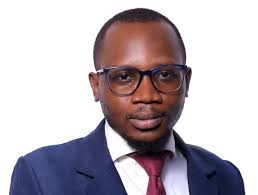
Lawyer Simon Peter Esomu and journalist Mukose Arnold Anthony despite being in prison where was remanded after his abduction shortly after appearing for a radio talk show on Metro Fm and after three days arraigned before LDC Court where he was charged with spreading fake news have jointly petitioned the High Court, seeking to overturn a March 27, 2026 ruling that barred live video and audio recording of proceedings in Criminal Case No. 590 of 2025 in the trial of NUP members, including Deputy Spokesperson Alex Waiswa Mufumbiro and Eddy Mutwe, on charges of unlawful assembly, common nuisance, and unlawful drilling..
In their Notice of Motion, brought under Section 36 of the Judicature Act and the Judicature (Judicial Review) Rules, 2009, the applicants argue that the magistrate’s decision was “arbitrary, blanket, and unjustified,” and made without granting affected parties including the media and public a chance to be heard.
The applicants contend that the ban violates fundamental principles of open justice, a cornerstone of democratic legal systems that ensures transparency and public accountability in court proceedings.
“The ruling is illegal, irrational, procedurally improper, and disproportionate,” the application states, adding that it undermines constitutional rights such as freedom of expression, access to justice, and the right to a fair hearing.
Esomu, the first applicant, positions himself as a public-interest litigant committed to defending constitutionalism and the rule of law. Meanwhile, Mukose, Head of Programs at Alternative Digital TV and a member of the Uganda Journalists Association, argues that the ban obstructed his professional duty to inform the public.
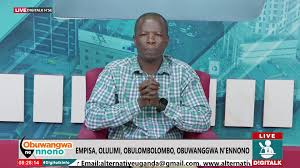
According to court documents, the disputed directive was issued abruptly during proceedings, effectively prohibiting journalists from using cameras for live coverage inside the courtroom. The applicants claim no prior notice or hearing was afforded before the restriction was imposed.
The case now seeks three major remedies: a declaration nullifying the magistrate’s ruling, an order of certiorari to quash it and any subsequent proceedings arising from it, and an order of mandamus compelling the court to permit media coverage under reasonable guidelines.
Legal analysts say the outcome of this case could have far-reaching implications for press freedom and judicial transparency in Uganda.
“This is not just about one courtroom,” a Kampala-based legal observer noted. “It’s about defining the boundaries between judicial control of proceedings and the public’s right to know.”
The Attorney General, named as the respondent in the matter, is expected to defend the state’s position as the case proceeds.
As the High Court prepares to hear the application, attention is mounting from legal practitioners, media houses, and civil society groups, all watching closely to see whether the judiciary will reaffirm or restrict the principle of open justice in Uganda.
